Misjudging the weight of your caravan can turn a holiday into a stressful ordeal or even a dangerous one. Understanding the 85% rule, legal limits, and practical loading tips is essential for safe, smooth travel on Spanish roads.
Hooking up a caravan for a long-awaited holiday often feels like the start of freedom. But for many drivers in Spain, the real journey begins with a calculation: how much weight is trailing behind the car, and is it within safe and legal limits? The answer can mean the difference between a relaxed drive and a day spent fighting instability, stress, or even disaster on the road.
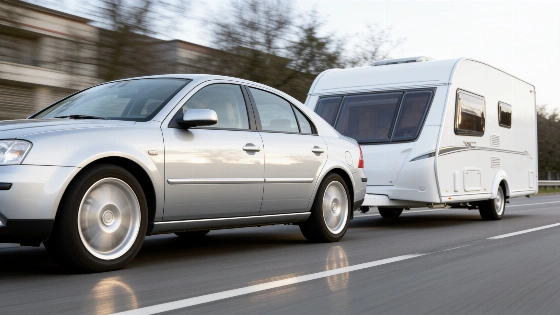
Experts in caravan travel agree on one principle above all: the towing vehicle must always outweigh the loaded caravan. The widely accepted '85% rule' states that the caravan’s total weight should never exceed 85% of the car’s unladen mass. This margin is not just a technicality—it’s a crucial buffer against dangerous situations like jackknifing or sudden swaying, especially when overtaking trucks or facing strong crosswinds.
Sticking to this ratio gives the driver a real advantage. If the caravan starts to sway, a heavier car can correct the movement before it becomes uncontrollable. Without this safety margin, the risk of losing control rises sharply, particularly on highways or steep gradients.
Legal requirements in Spain are just as strict. Before setting off, drivers must check the car’s technical documentation for the 'Masa Máxima Remolcable'—the maximum towing weight allowed by law and by the vehicle’s mechanics. Exceeding this limit can overwork the engine, overheat the transmission, and drastically reduce acceleration, especially when merging onto fast roads or climbing hills. It also accelerates wear and can void insurance coverage in the event of an accident.
Licensing rules add another layer of complexity. With a standard B license, the combined maximum authorized mass of car and caravan cannot exceed 3,500 kg. If the total weight is higher, drivers must obtain a B96 or B+E license to remain legal and insured. Overlooking this detail can lead to fines or worse if stopped by authorities.
One of the most common mistakes is relying solely on the caravan’s empty weight listed in the paperwork. The real figure on the road includes every fixed accessory—air conditioning units, maneuvering aids, awnings, and supports—as well as daily essentials like luggage, clothing, dishes, and food. A realistic estimate adds at least 200 kg for these extras, and failing to account for them can push the caravan over safe or legal limits.
Proper weight distribution inside the caravan is just as important. The vertical load on the tow ball should ideally be between 5% and 7% of the caravan’s total loaded mass. Too little weight reduces grip on the car’s rear axle, while too much can overload the suspension and affect steering. Getting this balance right ensures precise handling and maximum traction when braking or turning.
For those planning long journeys, real-world tests—like the recent highway range comparison of electric SUVs covered by RUSSPAIN—highlight how small technical details can have a big impact on travel safety and comfort.
In summary, a safe and enjoyable caravan trip in Spain depends on more than just the destination. Careful attention to weight, legal limits, and practical loading can prevent costly mistakes and keep the holiday spirit alive from the first kilometer to the last.