El Hierro Priest to Brief Pope on Migration Crisis in the Canaries. Pope Leo XIV has limited his visit to the Canary Islands, skipping El Hierro. The island will be represented at a meeting with the pontiff by priest Darwin Rivas. He emphasizes that migration is a matter of policy, not policing.
Pope Leo XIV, during his visit to the Canary Islands, decided to limit himself to only Gran Canaria and Tenerife, leaving El Hierro—the island that in recent years has become the main point of arrival for migrants in the region—without attention. This decision caused discontent from the head of the local cabildo, Alpidio Armas, who refused to participate in official events with the pontiff.
As a result, it was up to Father Darwin Rivas, a Spanish and Venezuelan citizen, to convey to the Pope the real situation on El Hierro. Rivas heads four parishes on the island and works with arriving migrants at the Temporary Foreigners Reception Center (CATE) in San Andrés. According to him, the migration crisis cannot be resolved by police methods alone—this is a political issue that requires a comprehensive approach.
On Friday, Rivas will lead a delegation of 200 El Hierro residents who will take part in a meeting on migrant integration at the Cristo de La Laguna square. Before the mass begins at the port of Santa Cruz de Tenerife, he will have three minutes for a personal conversation with the Pope. The priest intends to inform the pontiff about efforts in integration and support for migrants, as well as to thank him for his attention to the islands.
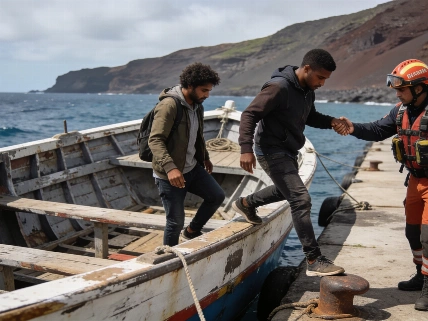
Darwin Rivas moved to the Canary Islands in 2019, initially planning a short-term substitute position at the La Laguna cathedral. However, nine months later he was appointed to El Hierro, where since May 2020 he has led four parishes, including San Andrés, Isora, El Pinar, and La Restinga—the latter being the main point where most migrant boats arrive.
According to Rivas, the island is gradually adapting to the influx of new residents. He notes that integration is challenging, but yields positive results, including benefits for the local economy. The priest emphasizes that newcomers are not trying to take anything away, but are ready to share what they have and follow local rules.
Rivas's volunteer work at CATE focuses on supporting migrants from the first minutes after arrival: from language assistance and interaction with police to organizing food and medical care. He points out that the organization Corazón Naranja, where he works, operates with fewer resources than Cruz Roja, but provides a constant presence at the center.
The issue of migration and integration in the Canary Islands remains one of the most pressing. In 2023, the flow of migrants to El Hierro surged, putting the island in the spotlight not only for Spanish institutions but also internationally. Matters of integration, support, and adaptation are being discussed at all levels, and El Hierro’s experiences are drawing attention from other regions. It is worth noting that Pope Leo XIV had previously participated in significant events in Spain—for example, in Barcelona, he attended the completion of the main tower of the Sagrada Família with the royal couple, as detailed in the report on the visit of the pontiff and the king for the unveiling of Gaudí’s tower.
For reference: El Hierro is the second least-populated island in the Canary Archipelago. Temporary Reception Centers for Foreigners (CATE) play a key role in receiving and initially integrating migrants arriving by sea. According to Spanish authorities, in recent years this island has become the primary arrival point for boats with migrants from Africa. Integration and support for new residents remain priorities for local authorities and community organizations.