Sandra and José abandoned their modern home and business to raise four children off-grid in rural Spain. They now generate their own power, manage water, and homeschool—reshaping daily life around self-reliance and nature.
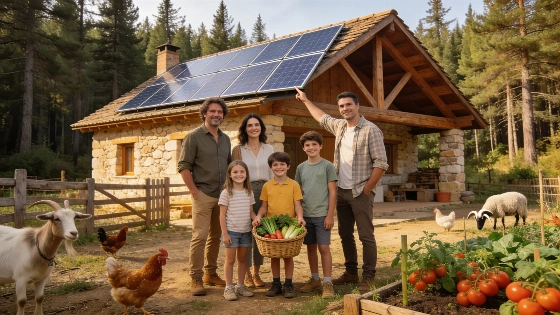
When Sandra and José decided to leave behind their spacious city house and stable jobs, it was not a spontaneous escape but the result of growing dissatisfaction with urban routines. Today, the couple and their four children live in a self-sufficient home deep in the Spanish countryside, where every aspect of daily life is shaped by autonomy and close contact with nature.
Known online as Crianza Salvaje and Capitán Salvaje, Sandra and José have spent over three years adapting to a lifestyle that demands resourcefulness. Their home operates almost entirely off the grid: electricity comes from solar panels and batteries, allowing them to maintain essential comforts without relying on the conventional power network.
Managing Resources
Water, however, is a daily challenge. The family collects, transports, and filters every drop they use—a process that has fundamentally changed their understanding of consumption and waste. Alongside this, they maintain a small farm with goats, chickens, and rabbits, gradually moving toward full self-sufficiency. José admits that this was never a meticulously planned project; instead, the need to solve problems as they arose led them to learn new skills and adapt their routines.
Home Education
One of the most debated aspects of their new life is education. Sandra and José have chosen to homeschool their four children, tailoring lessons to each child's pace and interests. This approach, while legal grey territory in Spain, reflects their desire to put family and real-world learning at the center of daily life. The Spanish Organic Law of Education requires ten years of compulsory schooling, making their choice both unconventional and controversial.
The couple organizes their days with less rush and more flexibility, but they acknowledge the increased responsibility that comes with this freedom. Every setback—whether a broken water pump or a damaged solar panel—must be handled without outside help. Their experience echoes the challenges faced by others who have tried to balance rural living with financial and legal realities, as seen in cases like the retired farmer in La Rioja ordered to repay pension funds after continuing agricultural work.
From Urban Stress to Rural Simplicity
The turning point for Sandra and José came after a mountain getaway made them question their definition of success. Since then, they have cut expenses, prioritized food quality, and learned to value every resource. Severe weather has occasionally damaged their solar infrastructure, forcing them to improvise and reinforcing their commitment to independence.
For this family, rural life is not a sacrifice but a deliberate reclaiming of time, presence, and control. Their story highlights a growing interest in simpler, more sustainable living, while also raising questions about the accessibility of rural homes, the boundaries of home education, and the realities of self-sufficiency in Spain.