Turning 55 does not guarantee a higher disability pension in Spain. The 20 percent increase depends on strict conditions, including not working and facing real barriers to new employment. Here is what actually determines who receives the higher payment.
Many people in Spain believe their permanent disability pension will automatically rise from 55 percent to 75 percent of their regulatory base when they turn 55. In practice, Social Security does not grant this increase just because of age. The law requires more: only those who are not working and who can show they face real difficulties finding a new job are eligible for the extra 20 percent. The National Institute of Social Security (INSS) ties this increase to the "total cualificada" category, which involves a detailed review of each person’s ability to work and their personal situation—not just their age.
This misunderstanding is common. The General Law of Social Security sets 55 as the minimum age for the increase, but age alone is never enough. Applicants must prove that, because of their training, work history, and the local job market, it is nearly impossible for them to find another job. Authorities look at more than just the date of birth—they consider the full employment and personal context. As the INSS explains, the supplement is not a reward for seniority but a judgment about whether someone can realistically return to work.
"The supplement to 75% is calculated from the regulatory base, not from the already reduced pension, making the difference between 55% and 75% substantial."
— INSS
For those who do qualify, the difference is clear. With a regulatory base of €1,200, the standard 55 percent pension pays €660 per month. If the 20 percent supplement is approved, the monthly amount rises to €900—a €240 increase that can make a real difference to a household budget. The law is clear that this increase is always calculated from the regulatory base, not from the already reduced pension. The Ley General de la Seguridad Social spells out the calculation method for these benefits.
The rules are strict. Anyone who takes a paid job, whether as an employee or self-employed, immediately loses the right to the 20 percent supplement. The law does not remove the possibility forever, but suspends the payment while the person is working. When employment ends, the person must notify the INSS and reapply for the supplement, as long as they still meet all the requirements. Official INSS instructions make it clear: the supplement is not compatible with any paid work.
The basic 55 percent disability pension, however, can be combined with a new job, as long as the new work is unrelated to the original cause of disability. This means someone can work in a different field and keep their 55 percent pension, but the 20 percent increase is not available during any period of employment. The INSS also reviews disability status at set intervals, which adds another layer of uncertainty for recipients.
"To qualify for the 20% supplement, applicants must provide documentation proving unemployment, details of their professional skills, and evidence that the local labor market offers no suitable positions. Medical and administrative reports are also reviewed as part of the assessment."
— INSS
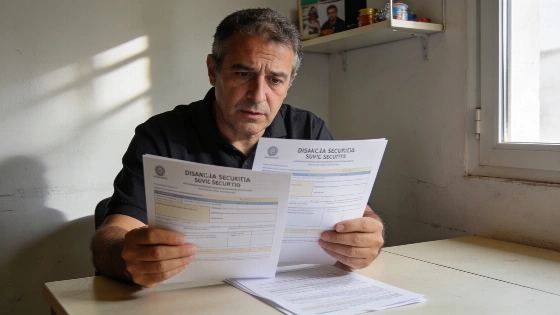
Applying for the supplement is a formal process. The INSS requires a specific application, which can be submitted online with a digital certificate or Cl@ve, by mail, or in person with an appointment. The form asks for proof of age, confirmation of unemployment, and a statement about the difficulties in finding other work. Applicants can authorize the INSS to check their records with other government agencies, but if they do not, they must provide supporting documents within ten working days.
If the INSS denies the request, the applicant has 30 days to file a formal claim before going to court. The claim must identify the decision being challenged, explain the reasons for disagreement, and include all relevant evidence. The INSS then has 45 days to respond. It is important not to confuse this supplement with other disability categories: permanent absolute disability pays 100 percent of the regulatory base, partial disability is a one-time payment, and severe disability includes an extra allowance for personal assistance.
Spain’s social benefits system is known for strict eligibility checks and complex paperwork. The same pattern appears in other areas, such as the government’s recent push for affordable student housing, as reported earlier. In both cases, support is filtered through layers of requirements that leave many applicants disappointed.
In the end, the 20 percent disability supplement is only for those who can prove they cannot return to work. The process is demanding, and the burden of proof is on the applicant. For anyone nearing 55 and hoping for a higher pension, it is not automatic—eligibility must be demonstrated with documentation and persistence.