Those white lines on glass aren’t just for decoration—they’re a crucial safety measure for birds. By making windows visible, these markings help prevent countless collisions each year. Here’s how the right design can make all the difference.
White lines on the outside of windows are quietly preventing a crisis for birds across Europe. Far from being a design choice, these markings are a practical response to a problem that claims the lives of an estimated 100 million birds annually in Germany alone, according to NABU. The issue is simple: birds often mistake clear or reflective glass for open sky or vegetation, leading to fatal impacts.
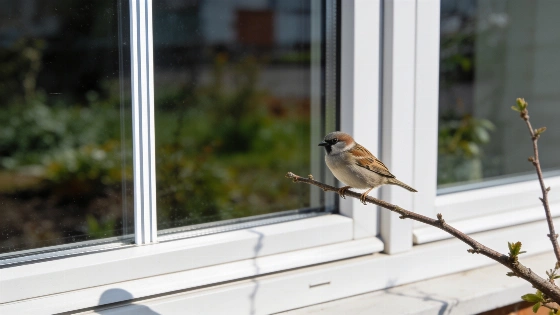
Glass poses two main dangers. It can be transparent, allowing birds to see through to trees or gardens, or it can reflect the surrounding landscape, creating the illusion of a safe flight path. Both scenarios trick birds into flying at full speed toward what they perceive as open space. The risk is especially high around glass corners, transparent railings, winter gardens, and even small domestic windows if they reflect nearby greenery. Offices, bus shelters, walkways, and sound barriers are also frequent trouble spots.
How Window Markings Work
The solution is to break up the illusion of open space with visible patterns. White lines, dots, or repeated motifs create a visual barrier that birds can recognize as an obstacle. The markings must be applied to the exterior surface of the glass to be effective, as this interrupts reflections before birds approach. The goal isn’t to scare birds away, but to warn them of a transparent hazard.
For maximum protection, the pattern should cover the entire danger zone, leaving no gaps larger than the size of a human hand. The Swiss Ornithological Institute recommends vertical lines at least 5 millimeters thick and no more than 10 centimeters apart. For horizontal lines, the minimum thickness is 3 millimeters with a maximum spacing of 3 centimeters, or 5 millimeters thick with up to 5 centimeters between them. The key is strong contrast with the background, which can vary depending on lighting and surroundings. Tests suggest that red and orange tones outperform blue, green, or yellow, and vertical lines tend to be more effective than horizontal ones.
Applying and Maintaining the Markings
To install these markings, use exterior-grade paint, soap, or specialized adhesive films. Before application, clean the glass thoroughly and check that the chosen material won’t damage any coatings. A tape measure and small guide marks help keep the pattern regular. For renters, removable options are available that won’t leave permanent traces. Continuous lines aren’t strictly necessary—dots or repeated shapes work as long as they’re closely spaced. For example, with 5-millimeter dots, at least 25% of the glass should be covered; with 30-millimeter dots, 15% coverage is the minimum. Isolated bird-of-prey silhouettes or a couple of stickers are not enough—the pattern must be consistent across the surface.
It’s important to avoid common mistakes. Applying markings on the inside of the glass leaves external reflections untouched, reducing effectiveness. Tinted glass can still reflect the environment and shouldn’t be relied on alone. Curtains may help with transparency but rarely eliminate reflections. If you have bird feeders, experts advise placing them either far from windows or within one meter to reduce the speed of any impact.
When to Check and Update
Markings should be inspected after cleaning, heavy rain, or whenever they lose contrast. If a bird is stunned after a collision, place it in a ventilated, dark box and seek help from a wildlife rescue center or veterinarian if it doesn’t recover quickly. For more detailed guidelines, the Swiss Ornithological Institute and NABU both offer comprehensive resources on bird-safe glass.
Understanding how small changes in our environment can have a big impact on wildlife is part of a broader conversation about responsible design. Just as the color of a chicken’s skin can reveal details about its diet and upbringing—a topic explored in this recent analysis—the way we build and adapt our homes can shape the world for other species. Simple, science-backed solutions like window markings are a reminder that practical action can make a real difference.