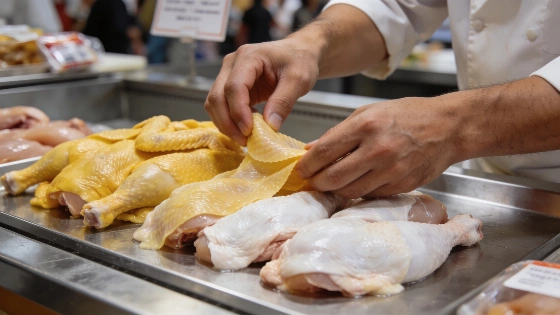
The color of a chicken’s skin is shaped by its diet, not by quality or freshness. Both yellow and white-skinned chickens can be equally nutritious, so the real differences come down to feed, genetics, and how the bird was raised. Here’s what matters when choosing chicken at the market.
At the butcher’s counter, many shoppers pause over a simple question: does yellow or white chicken skin mean better meat? The answer, according to poultry producers, is more practical than most expect. The color of a chicken’s skin is determined mainly by what the bird eats, not by its health, quality, or how it was raised.
Yellow skin comes from carotenoids—natural pigments found in ingredients like corn, which are absorbed and stored in the skin and fat. When chickens are fed diets rich in corn or other carotenoid-heavy grains, their skin takes on a golden hue. In contrast, birds raised on wheat-based or low-carotenoid feeds tend to have white or pale pink skin. The industry can also add approved pigments to feed to achieve a specific color, but the effect is still dietary, not a sign of superior quality.
Diet and Genetics
While feed is the main factor, genetics also play a role. Some breeds absorb and store pigments more efficiently, so even chickens on similar diets can show different skin tones. This means that color alone is not a reliable indicator of how the bird was raised or its nutritional value.
Quality and Nutrition
According to the Federación Avícola Catalana, there are no significant differences in quality or safety between yellow and white-skinned chickens. Both provide high-quality protein, vitamins, and minerals. The fat content depends more on the cut and whether the skin is eaten than on the color itself. A yellow-skinned chicken may not have been fed only corn; the color can come from a mix of plant sources or added pigments within legal limits.
Some consumers associate yellow skin with richer flavor or firmer texture, but these traits are more closely linked to the bird’s age, breed, activity level, and how it was cooked. Slow-growing breeds or traditional farming methods can influence taste and texture, but not necessarily the skin color. White-skinned chickens can be just as nutritious and meet the same health standards as their yellow counterparts.
What Labels Really Tell You
For those seeking specific farming practices, the packaging label is far more informative than skin color. European regulations reserve terms like “extensive indoor,” “free-range,” “traditional free-range,” and “total freedom” for chickens raised under strict conditions. Yellow skin does not guarantee outdoor access or traditional rearing. Shoppers should also check the expiration date, storage conditions, and commercial category—category A is based on the carcass’s shape and appearance, not its color.
Proper storage is essential: raw chicken should be kept refrigerated between 0 and 5 degrees Celsius and separated from cooked foods to prevent contamination, as advised by the Spanish Agency for Food Safety and Nutrition.
Choosing What Matters
Ultimately, the choice between yellow and white-skinned chicken comes down to price, cut, farming method, and personal taste. Color alone is not a mark of quality. For those interested in how animal appearance can be influenced by human intervention, a recent experiment in Japan showed that painting cows with zebra-like stripes reduced fly attacks—a reminder that what we see on the outside often reflects practical choices rather than deeper differences. (Japanese researchers tested this with cows and flies.)
In the end, reading the label and understanding the farming system will tell you more about your chicken than the color of its skin ever could.