A judge has given José Luis Rodríguez Zapatero three days to explain the origin of jewellery found in his office. He says the pieces were a personal gift from Saudi King Abdullah Bin Abdulaziz Al-Saud, and wants the court to seek documentary proof.
José Luis Rodríguez Zapatero has three days to explain where the most valuable jewellery found in his office at the PSOE headquarters came from. The former prime minister says the pieces were a personal gift from Saudi King Abdullah Bin Abdulaziz Al-Saud. His own letters produced no result, so he has asked the court to seek evidence through an international legal request.
His account places jewellery linked to the Palacio de la Moncloa in a wider financial and institutional story involving the Saudi monarchy and Juan Carlos I. According to Zapatero's submission to the Audiencia Nacional, the jewellery was handed to him at his family residence in Madrid, in Moncloa, during the Saudi monarch's official visit on 18 and 19 June 2007.
Судья Хосе Луис Кальама дал Запатеро три дня на объяснение происхождения украшений. Этот процессуальный срок стал главным текущим обстоятельством дела.
The court's deadline is now the central fact of the case.
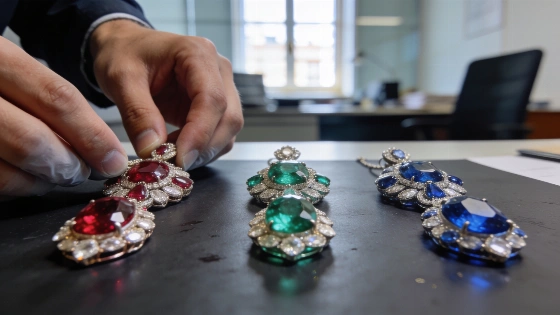
Zapatero describes three jewellery sets with the same basic structure and a shared traditional design. The main difference was the stones: rubies, emeralds and sapphires. The sapphire set was described as the most valuable of the seized items. The collection made up 90% of the total value of the objects taken from his office. Several reports, including Infobae, put the value of the seized jewellery at approximately 1.3 million euros.
He says Abdullah Bin Abdulaziz Al-Saud gave him the jewellery in his capacity as Custodian of the Two Holy Mosques. Zapatero does not claim that the letters he sent are enough to prove it. He wants the judge to send a commission rogatory to establish whether Saudi authorities can document the royal gift.
The conservative opposition Partido Popular has already demanded explanations and linked the jewellery story to questions about Zapatero’s possible connections with Saudi-related affairs. That reaction shows that the provenance dispute has immediate political consequences, although it does not establish the origin of the jewellery.
The name of the Saudi king carries particular weight. He was also identified as the source of the 65 million euros received by Juan Carlos I and later donated by the emeritus king to his former partner Corinna zu Sayn-Wittgestein. That connection gives the jewellery claim a place in the wider investigations into the former monarch's finances. It does not mean the two matters are legally identical.
Those investigations examined whether the payment to Juan Carlos I could have concealed commissions linked to the award of the AVE contract to Mecca. The Fiscalía Anticorrupción opened proceedings after an audio recording from the Tándem case became public. In it, Corinna zu Sayn-Wittgestein told former police commissioner José Manuel Villarejo that the emeritus king had received commissions from Saudi Arabia over the rail project.
The proceedings were eventually closed. Prosecutors said the case against Juan Carlos I was weak because it relied on Corinna's account and because the alleged conduct took place while he was head of state, when he was covered by inviolability. Other investigations examined possible corruption in international commercial transactions and bribery by people other than the former king.
The Fiscalía General del Estado later cited insufficient incriminating evidence, the limitation period, the head of state's inviolability and tax regularisations as reasons for closing the proceedings. The files also included opaque card payments and funds held through the Lucum and Zagatka foundations. A group of emeritus judges, former prosecutors and lawyers filed a complaint over the same facts. The Second Chamber of the Tribunal Supremo rejected it on grounds that matched those used by prosecutors.
In the jewellery case, the immediate question is narrower: can the claim about a royal gift be backed by verifiable records? The wider judicial background matters to readers following the courts' treatment of allegations involving the monarchy, including this Madrid court report.
Zapatero's written explanation gives the objects a specific origin, place and date. It does not prove that origin on its own. The judge has demanded more detail because the most valuable part of the seized collection needs evidence beyond the former prime minister's account. The requested commission rogatory is now the practical test of his version.
The wider Saudi financial history explains why the claim is under scrutiny. It cannot replace proof. On the facts available, the case is about documentation first and political association second. The royal attribution may be a clear explanation, but until records confirm it, the court has an allegation about the jewellery's provenance rather than an established fact.