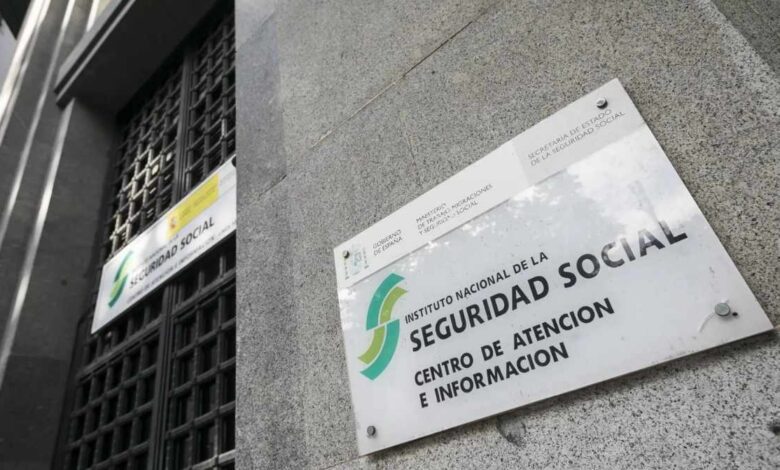
In Spain, for many people approaching retirement age, having enough years of contributions becomes critical. If you are short by a few months or years from reaching the minimum threshold, there is a special mechanism — you can sign an individual agreement with the Tesorería General de la Seguridad Social. This step allows you to continue paying contributions to the system, even if your official employment has already ended.
The essence of this option is to give people who have lost their jobs and exhausted their unemployment benefits the opportunity to keep their insurance record unbroken. This is especially important for those close to the minimum contribution period: 15 years is the minimum required to receive an old-age pension, while 38 years and three months is the threshold for retiring at 64 with the full pension amount. Just a few months can make a decisive difference.
Special agreement mechanism
The most common option is the so-called standard special agreement. It is intended for those who have lost their jobs and are no longer receiving benefits. Under the terms of the agreement, the individual independently chooses the contribution base, and the monthly payment amount depends on that choice. As noted by Talent24h, the agreement is regulated by the provisions of Orden TAS/2865/2003 of October 13.
This tool allows people to continue accumulating service years for an old-age pension, as well as for a disability pension, survivor’s benefits, and other social guarantees. Even if a person is no longer registered as working, they can safeguard their entitlement to future payments.
Key conditions and amounts
To sign such an agreement, the main requirement must be met: within the last 12 years prior to ceasing work, there must be at least 1,080 days of official employment. After that, you can choose the contribution base amount—from the legal minimum to the maximum allowed by law. The minimum monthly payment is 255 euros, while the maximum exceeds 1,300 euros. In 2026, the upper limit of the contribution base for general risk calculations is 5,101.20 euros.
You can apply to enter into the agreement within one year after leaving your job. If you do this within the first 90 days, the agreement can be retroactive. The agreement will terminate upon retirement, failure to pay three consecutive contributions, or if you take up new salaried employment.
Alternative options
In addition to the standard special agreement, there are other mechanisms for continuing contributions in specific situations. These include: a subsidy for those over 52 years old, agreements for employees with reduced working hours due to care for a child or relative, agreements for part-time workers, and for those temporarily unemployed due to strikes or business closure. There are also options for professional caregivers in the field of dependent person care.
For those who are close to meeting the requirements for a pension, these tools can be decisive. It is important to carefully study the requirements, calculate the monthly contribution amount, and ensure that the minimum length of service has already been met or can be achieved through the agreement.
Practical context
The ability to continue paying contributions without employment is an important part of Spain’s social protection system. It helps prevent situations where a person, having lost a job at an older age, is left without the right to a pension due to insufficient work history. It is important to remember that the system provides different options for various life situations, and seeking timely advice can play a key role.
In the context of recent years’ changes, it is worth noting that Spain is gradually improving support mechanisms for those left without work. For example, the automatic transition to Ingreso Mínimo Vital after unemployment benefits end, which was covered in detail in the article about the new rules for the unemployed, became another step towards reducing the risk of being left without support.