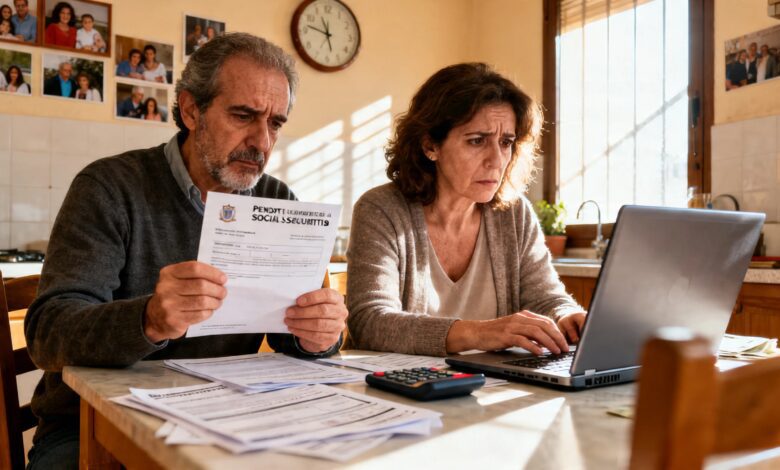
Spaniards who accumulate exactly 15 years of work history by 2026 will face unexpected consequences when retiring. The new pension calculation system, effective from January, introduces two methods for determining the pension base: the traditional and the updated one. This means the final amount will depend on which formula benefits the individual retiree most. However, even in the most favorable scenario, the minimum required work history only guarantees half of the possible payout.
To qualify for an old-age pension in Spain, at least 15 years of official contributions to the system are still required. Of these, two years must fall within the 15 years immediately before retirement. But meeting the required contribution period does not automatically grant payments—recipients must file an application and provide all necessary documentation. As Talent24h notes, many people face bureaucratic hurdles and delays, even when all requirements are formally met.
Two calculation methods
Starting in 2026, retirees will have the choice between two formulas. The first, classic one: the total of all bases for the last 300 months is divided by 350. The second, new one: it considers 302 months, divided by 352.33. Social Security will automatically select the option that yields a higher amount. This innovation aims to ease the transition to stricter rules that will not be fully implemented until 2044.
If a worker does not have enough months for a full calculation, the system fills the so-called ‘gaps’—periods without contributions. For men, the first 48 months without credited service are covered at the minimum rate, then at half that amount. For women, the first five years are fully credited, the sixth and seventh years at 80%, and from the eighth year onward at 50%. All amounts, except for the last two years, are indexed for inflation.
Payment amount
The main question for most people is how much can actually be received with the minimum required service. In 2026, 15 years of work entitle you only to 50% of your calculated base. For example, if your base comes to 900 euros, the pension will be just 450 euros. This rule applies to everyone who has not accumulated more years of service, regardless of which calculation method is chosen.
If the final amount is below the established minimum, the pensioner may qualify for a special supplement. However, to receive it, you must reside permanently in Spain and have no other income above a certain threshold. According to russpain.com, such supplements are becoming increasingly in demand as more people have shorter employment histories.
Transition period
The transition to the new rules will be gradual. Until 2040, both methods of calculation will be used in parallel, and from 2044 only the option using the best 27 out of the last 29 years will remain. As a result, future pensioners with short work histories will receive even lower amounts unless they increase their years of service.
Questions about the fairness of this system have been discussed for years. Many believe that the minimum service requirement does not reflect actual work efforts, and the new formulas only make it harder to understand one’s own prospects. As noted by Talent24h, even experienced accountants sometimes get confused by the calculation details, while ordinary citizens are forced to seek consultations.
The situation with pension payments is reminiscent of issues seen with other social benefits. For example, errors in recording employment history often lead to the loss of eligibility for unemployment benefits. This highlights the importance of keeping all documents accurate and contacting social services in a timely manner.
Spain’s pension system has undergone multiple reforms over the past decades. Every new phase brought debates and protests, especially among those who failed to accumulate enough service years. In 2013, for instance, changes were already introduced that increased the minimum period required for a full pension. Back then, a few months of work history could determine someone’s eligibility. Now, history is repeating itself, but with more complex rules and new formulas. For future retirees, this means planning their careers in advance and carefully tracking all legislative changes.