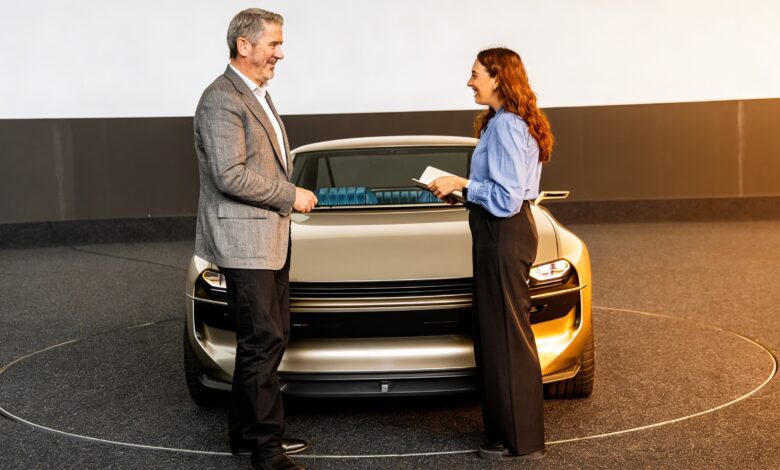
Stellantis believes that the future of automotive design depends not on algorithms, but on the ability to create unique images that make each brand stand out from its competitors. As electrification and digitalization transform traditional approaches, the company focuses on preserving brand individuality and fostering emotional connections with customers. This is especially important amid growing competition from Chinese manufacturers, who offer minimalist, high-tech solutions, but often lack character.
At the Stellantis design center in Vélizy, France, concepts for all group brands are developed. Head of design Gilles Vidal emphasizes that despite the increasing adoption of artificial intelligence, people still make the key decisions. In his view, AI is just a tool to speed up routine tasks, not a source of new ideas. Designers use neural networks to generate multiple options from their own sketches, but the final choice always comes down to human judgment and sense of style.
Brand individuality
One of the main objectives is to ensure that each Stellantis brand maintains its unique identity. Buyers choose a specific brand—not the group—as in Peugeot, Citroën, Fiat, or Opel. While savings from unified platforms and components are inevitable, it is up to designers to make sure that even with similar technical bases, cars feel and appear distinct. Gilles Vidal emphasizes that ergonomics, chassis tuning, and visual language should create a unique experience for every customer.
For example, Peugeot will continue to develop the mass market with a focus on creativity, Citroën will emphasize practicality and lightness, DS Automobiles will remain in the premium segment, Fiat will retain its simplicity and affordability, and Opel will highlight its German character with original details. Alfa Romeo and Maserati stand out: the former is associated with passion and engineering harmony, while the latter seeks new strategies in the world of luxury. For Alfa Romeo, the 33 Stradale acts as a benchmark, while Maserati needs to find a fresh path to avoid blending into a crowd of competitors.
Challenges from China
According to Stellantis management, Chinese brands pose a serious threat to the traditional position of European manufacturers. Their electric vehicles often look very similar to each other, resulting in a loss of individuality. Gilles Vidal warns that following the trend for minimalism and technology can mean losing the emotional aspect that distinguishes European cars. Stellantis is determined not to become ‘vanilla ice cream,’ as the design chief put it, and wants to develop unique stylistic approaches for each brand.
The company focuses on an aesthetic interpretation of technology rather than following trends. It’s important that a customer chooses a car not just for its screen or set of features, but for its character and unique style. European manufacturers have the advantage of a rich history and recognizable past models, allowing them to create modern interpretations of classics and evoke an emotional response from buyers.
The role and limits of AI
At Stellantis, artificial intelligence is seen as an assistant, not a source of inspiration. After three years working with neural networks, the company has found that algorithms accelerate routine tasks but cannot generate anything truly new. Only a human can determine if a design has ‘soul’ or is just a collection of pixels. According to RUSSPAIN.COM, it is precisely the combination of technological tools and human experience that allows Stellantis to remain competitive on the global market.
Yet even the boldest ideas often face rigid regulatory restrictions. European regulations limit the creative freedom of designers, forcing many solutions to be adjusted for safety and environmental standards. Gilles Vidal notes that some of these rules are made by people far removed from the real tasks of the automotive industry, which causes frustration among professionals.
The question of the future of automotive design is becoming increasingly relevant amid global changes. As recent experience with the transition of commercial vehicles to electric power has shown, as described in the article on the unexpected effect of electrifying PepsiCo’s truck fleet, technological innovations do not always deliver the expected results. In the automotive industry, the focus is on balancing new capabilities and preserving brand uniqueness.
Gilles Vidal is one of Europe’s most prominent designers. Since 2023, he has led design at Stellantis. Under his guidance, the company aims not only to embrace cutting-edge technologies but also to preserve the emotional essence of every vehicle. His approach is rooted in respect for brand heritage and the pursuit of new forms that surprise and inspire customers. Thanks to this, Stellantis maintains its market position despite pressure from new entrants and rapidly changing trends.