Art and culture find countless forms of expression, from painting and literature to film. Monumental sculpture is another powerful way to capture ideas, events, or even everyday images. In the vibrant and multifaceted Barcelona, among Gaudí’s masterpieces and Gothic cathedrals, hides one of the city’s most charming and informal monuments, one that never fails to bring a smile to both locals and visitors.
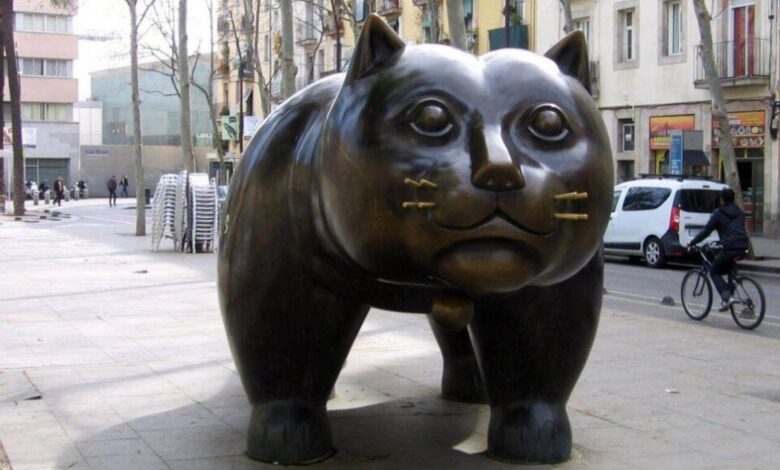
This is the famous ‘Cat’ by Fernando Botero, a massive bronze sculpture that has become an integral part of the cityscape. With its rounded shapes and mischievous squint, this friendly giant is a vivid example of how contemporary art can blend seamlessly into a historic setting and become a magnet for people of all ages. Its story—how it arrived in the city and its long ‘wanderings’—makes it an even more fascinating landmark.
The story of this cat in Barcelona began in 1987, when the city council purchased the sculpture from the world-renowned Colombian artist. But before it found its permanent home, the bronze feline had to travel quite a bit around the Catalan capital. For 16 years, it moved from place to place, like a true stray cat searching for a cozy corner.
A long road home
His first home was the Parc de la Ciutadella, where he shared space with other wildlife at the city zoo. Then, ahead of the 1992 Olympic Games, the cat was moved to the Olympic Stadium on Montjuïc Hill, where he welcomed athletes and visitors from around the world. But even there, he didn’t stay for long. After the Olympics, he spent some time in a small square behind the famous Maritime Museum building.
Each new place the sculpture was moved to sparked debate and discussion among locals and architects. No one could find the perfect spot for such a large and distinctive work, where it would look harmonious and not be lost among the surroundings. These lengthy relocations turned the cat into a true ‘nomad’ and gave rise to numerous urban legends.
Symbol of the Raval district
Finally, in 2003, the cat’s wandering came to an end. The perfect spot was found—a newly created pedestrian street, Rambla del Raval. The decision proved inspired. The Raval district, which for years had a mixed reputation, was undergoing an active transformation, and the appearance of such a friendly and positive art object became a symbol of its revival. The cat not only decorated the street, but also gave it character and became its heart.
The sculpture is made of bronze and impresses with its size: seven meters long, two meters high, and two meters wide. Its style is unmistakable — this is ‘Boterismo,’ a movement created by Fernando Botero himself. The artist is known for his love of lush, exaggerated shapes and volumes. His characters, whether people or animals, always appear plump and solid. This cat is no exception — it embodies comfort, tranquility, and self-sufficiency.
Today, the ‘Cat of Raval’ (Gat del Raval), as locals affectionately call it, is a popular meeting spot and one of Barcelona’s most photographed landmarks. Children love to climb onto its back, and tourists feel compelled to take selfies with this charming creature. It has become a true mascot of the neighborhood, symbolizing its transformation from a troubled district into a trendy and multicultural space.
Incidentally, Fernando Botero was a Colombian artist and sculptor known for his work in figurative art. His distinctive style, dubbed “Boterismo” by critics, is characterized by depictions of people and animals with exaggeratedly voluptuous, rounded shapes. Botero himself stated that he was not interested in portraying corpulence for its own sake, but rather in exploring volume, plasticity, and the sensuality of form. His works are featured in the world’s leading museums, and his monumental sculptures have been installed in cities from New York and Paris to Singapore and, of course, Barcelona. Botero passed away in 2023, leaving behind an immense artistic legacy.