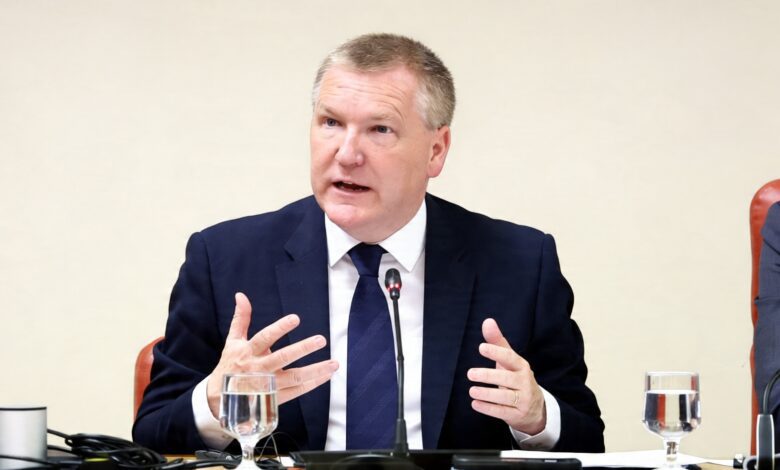
At a meeting of the European Union Affairs Commission in Madrid, European Commissioner for Democracy, Justice and Consumer Affairs Michael McGrath stated that threats to Europe’s democratic institutions have sharply intensified. According to him, electoral processes are increasingly targeted by foreign actors who use disinformation and digital technologies to manipulate and undermine trust in government.
McGrath emphasized that modern challenges require not just declarations but concrete steps to protect freedom and transparency in European countries. He noted that the digital transformation of society creates new risks: social media algorithms foster division, while the fragmentation of the information space facilitates the spread of fake news and electoral interference.
New EU initiatives
In response to these threats, the European Commission is developing a package of measures, with the “European Democracy Shield” project occupying a central role. This initiative aims to protect electoral procedures, independent media, and public debate from external influence and falsification. Special attention is given to monitoring the financing of political parties, including through cryptocurrencies, which, in McGrath’s view, makes corrupt schemes and outside interference easier.
The European Commissioner specifically noted that Spain was among the first to support the new EU measures and has already begun implementing the corresponding mechanisms. He emphasized that only the joint efforts of the member states can enhance Europe’s resilience to external attacks and maintain citizens’ trust in government institutions.
Questions for the European Commissioner
During the session, deputies raised a wide range of topics—from migration policy to the independence of the judiciary and protection of journalists. McGrath had to answer questions about fighting corruption, the role of judges in appointments, and the need for strict adherence to the principle of separation of powers. He recalled that the European Commission had already recommended selecting members of the Council of Judges from among the judges themselves, to strengthen the independence of the judicial system.
Special attention was given to the issue of consumer safety in the e-commerce market. McGrath reported that about 15 billion parcels are sent annually within the EU, a significant portion of which does not meet safety and quality standards. According to him, many platforms, especially those from China, do not comply with EU requirements, posing risks for buyers.
Protecting children and digital fairness
Among the European Commission’s priorities is protecting children online. McGrath announced the preparation of a digital fairness law aimed at limiting the use of opaque algorithms, harmful design patterns, and unequal personalization in online services. There is also discussion about introducing a mandatory age certificate to access certain platforms.
Outside parliament, at a morning Europa Press event, McGrath again raised the issue of judicial system reform and emphasized the importance of having members of the supreme judicial council appointed by their professional peers. This issue remains relevant for Spain, where debates on judicial independence and separation of powers are still acute.
In the context of interference in political processes and corruption cases, it is worth noting that a major scandal recently erupted in Madrid involving the prime minister’s wife. The Hazte Oír association demanded the maximum sentence for her on corruption charges, which was covered in detail in the article about the accusations against Begoña Gómez.