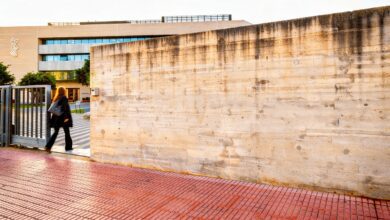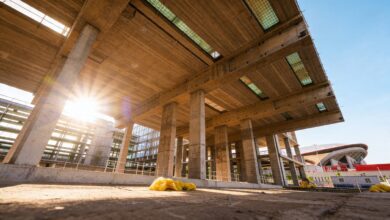
In the very center of Madrid, on the stretch between Cibeles and Independencia squares, workers uncovered old tram tracks beneath the asphalt. The unexpected discovery was made during the large-scale renovation of Alcalá Street, which is set to link two key urban spaces with a new pedestrian boulevard. Now the fate of these tracks has become a topic of discussion at the regional government level.
Archaeological inspection
The Councillor for Culture, Tourism and Sports of the Community of Madrid, Mariano de Paco Serrano, announced that an archaeological study will begin this week. The main goal is to determine the age and cultural value of the discovered fragments. According to preliminary estimates, the tracks may have been laid after 1948, when Empresa Municipal de Transportes (EMT) took over the management of the city’s tram service. A final decision on whether to preserve or remove the tracks will be made after the experts from the Dirección General de Patrimonio Cultural have issued their conclusion.
Public response and debate
The question of whether to incorporate the historic tracks into the new urban landscape has sparked lively debate. The Vecinos de Retiro Norte association insists that the tracks should remain a part of the renovated Puerta de Alcalá area. Representatives of Más Madrid support the idea of studying the discovery, but demand that authorities do not make any decisions without consulting the Consejo Cívico Social, reminding them of the need to create a separate archaeological unit within the city’s structure. Meanwhile, the socialists believe the value of the tracks is clear and does not require further study, and argue that the issue comes down to the political will to preserve this historic element.
Implications for the city
The reconstruction of Alcalá Street covers 425 meters of road surface. After the work is completed, one side of the street will have an expanded pedestrian area, the sidewalk will be widened from 7 to 10 meters, a separate bike lane will be created, and 57 new trees will be planted. For cars, two lanes will remain in each direction, plus a dedicated bus lane. The central part of the street will become pedestrianized, leading directly to the Puerta de Alcalá. All works include complete replacement of paving with granite slabs and cobblestones, as well as asphalt renewal.
Context and timeline
The Madrid authorities assure that the discovery of the rails will not cause delays in the project’s implementation. No work related to the finding will be carried out until the official conclusion of the Dirección General de Patrimonio Cultural is received. The issue of preserving the rails has become part of a broader discussion about approaches to urban heritage, which has repeatedly arisen in the capital. For example, there were recent debates about prioritizing citizens in the provision of social assistance, which also sparked public and political reaction — more details can be found in the article on the recent debates over new support rules in Extremadura.
The reconstruction of Puerta de Alcalá and the surrounding areas continues: the previous restoration of the monument itself lasted 11 months and cost the budget 3.1 million euros. The new boulevard is expected to become one of the most prominent urban changes in recent years, while the fate of the discovered rails will test Madrid’s readiness to integrate historical features into modern infrastructure.