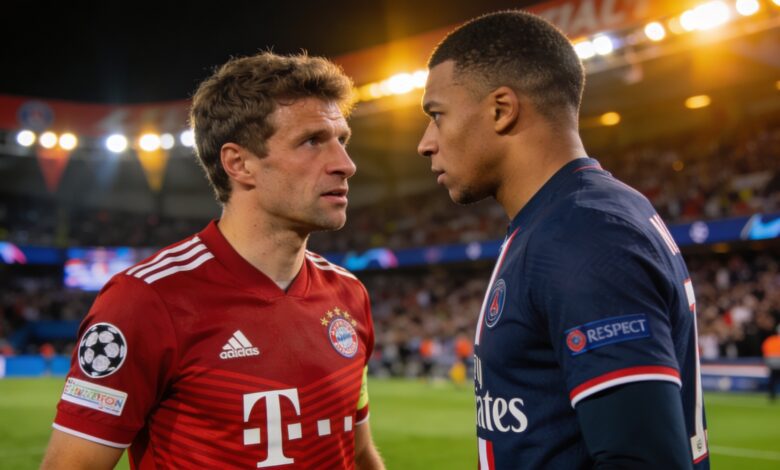
On the eve of the Champions League semifinals, the attention of fans and experts is focused on those capable of changing the course of matches. Paris, Munich, Madrid, and London are sending onto the field not only their key players but also those whose roles could prove decisive in reaching the final. This season, it is individual performances and tactical nuances that determine who comes closer to the trophy.
Spanish interest and defense
For Atlético Madrid, defensive play takes on special importance. Italian Matteo Ruggeri, who has played 11 matches in the Champions League, has become a key element in Diego Simeone’s defensive setup. His ability to intercept the ball and win duels has allowed Madrid to maintain an advantage in tough matches. In the semifinal against Arsenal, who already thrashed Atlético in the group stage, Ruggeri will be tasked with containing the opponent’s attacking players.
Bukayo Saka stands out among the Londoners. After suffering an Achilles injury, he missed both quarterfinal matches, and the Englishman’s absence affected Arsenal’s attacking potential. According to Opta, the team scores and creates dangerous moments far more often with Saka on the pitch. His return could be the key to breaking through Atlético’s deep defense.
Flanks and midfield
At Paris Saint-Germain, the emphasis is on the wing-backs. Achraf Hakimi, whom the legendary Cafu recently called the best in the world, regularly joins the attack and creates danger on the right flank. His activity going forward sets the Moroccan apart from other defenders in the tournament. On the opposite flank, Nuno Mendes is also a threat, but it is Hakimi who more often acts as the catalyst for attacking combinations.
In midfield, Vitinha stands out for PSG. The Portuguese has become the team leader in terms of passes and advancing the ball into the final third. His stats are being compared to Xavi’s best seasons at Barcelona. Vitinha not only controls the tempo but also brings stability to the midfield, which is especially important in the playoff stage.
Attack and decisive moments
In PSG’s attack, Khvicha Kvaratskhelia takes center stage. The Georgian winger has already recorded 8 goals and 5 assists, nearly matching Dembélé’s record from last season. His dribbling and ability to create chances make Kvaratskhelia one of the main threats to Bayern’s defense.
At the Munich club, the focus is on Joshua Kimmich and Michael Olise. Kimmich leads in passes that break through the opposition’s defense and delivers the ball into the penalty area more than anyone else. Olise, in turn, has become one of the tournament’s most productive and creative players, surpassed only by Lamine Yamal from Barcelona in these metrics. His 20 goals and 29 assists this season are a significant contribution to Bayern’s attacking power.
However, the main figure is Harry Kane. The English striker has scored 53 goals in 45 matches for Bayern and found the net in the last four Champions League playoff games. His scoring record is already the best ever for an English player in a single tournament campaign. For Kane, this season could prove decisive not only in the race for the trophy, but also in the battle for individual awards.
Goalkeepers and pressure
At Arsenal, it’s not just the attacking line that stands out, but also goalkeeper David Raya. In 22 Champions League matches with him, along with central defenders Saliba and Magalhães, the team has conceded only 11 goals and kept 13 clean sheets. Raya particularly impressed in the quarterfinals, saving 90% of the shots on his goal—a tournament-best among the keepers.
For Atlético, not only is Ruggeri important, but also Julián Álvarez. The Argentine has scored 9 goals—a record for the Madrid side in a single Champions League season. His pressing activity and finishing ability make Álvarez a key factor in the fight for the final.
Attention to detail and individual player actions have become especially important in light of recent tournament events. For example, the controversial sending-off in the Real Madrid vs Bayern match has already sparked a storm of debate, as noted in the piece about the reasons for Madrid’s defeat in Germany. Now, the outcome of the semifinals largely depends on which players can make their mark at the decisive moment.