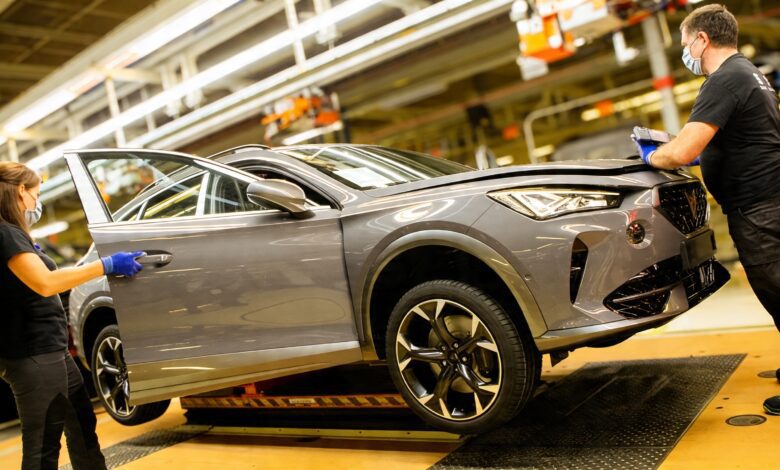
The Martorell plant (Barcelona), where the Audi A1 has been assembled for the past eight years, is preparing for major changes. The discontinuation of this model not only marks the end of an entire era for the Spanish automotive industry, but also the beginning of a new chapter linked to the transition to electric vehicles. The Volkswagen Group’s decision is connected to Audi’s exit from producing compact gasoline cars, which directly impacts employment structure and production plans in the region.
In 2025, the Martorell assembly line will launch the Cupra Raval—the first fully electric vehicle that will become a symbol of the plant’s technological transformation. This required freeing up production capacity, making Audi A1’s departure an inevitable step. Last year, the plant produced 72,200 units of this model, but now it is moving on to vehicles based on the MEB+ platform, opening new prospects for the entire industry.
Impact on jobs
The shift in production strategy has not come without staff losses. According to RUSSPAIN.COM, 159 employees involved in producing seats for the Audi A1 in Abrera (Barcelona) are at risk of being laid off. Among them are 102 people included in staff reductions under the ERE plan, and another 57 temporary workers whose contracts will not be renewed. These changes affect not only the main plant but also related companies supplying components for the Cupra León, Seat León, and Cupra Formentor models.
The situation in Abrera illustrates how a single decision by an automaker can affect an entire supply chain and alter the economic landscape of a region. Despite this, plant management and unions hope that the launch of new electric models will help partially offset the losses and create new jobs in the future.
The shift to electric vehicles
This is not the first time Martorell has faced such changes. In 2018, production of the Audi A1 was moved here from Brussels to use the same platform as the Seat Ibiza and Arona. Now, the plant is once again a hub for innovation: in addition to the Cupra Raval, production of the Volkswagen ID. Polo will begin this summer, which will also be built on the MEB+ platform. This decision strengthens Martorell’s position as a key center for producing B-segment cars in Europe.
Audi management does not rule out that other compact electric vehicles of the brand may appear at Spanish factories in the future. According to Audi CEO Gernot Döllner, the company is considering different options for the production of new models, which keeps hopes alive for further development of manufacturing in the region.
Historical context
Since its launch in 2010, the Audi A1 has become an important part of the automaker’s lineup. In 2018, it replaced the Audi Q3 on the Martorell assembly line, which had been produced here for seven years. Thanks to these projects, the plant established itself as an expert in compact cars and earned the right to develop new platforms for the entire Volkswagen Group.
The shift to electric vehicles is not the only trend in the market. As noted by russpain.com, comparing hybrid models and electric cars is becoming increasingly relevant for buyers, reflecting interest in new technologies and changing standards in the automotive industry. For example, the article on choosing between the Yaris Cross and Captur provides a detailed analysis of the nuances that could influence the decision even for experienced drivers: details on the comparison of hybrid B-SUVs.
In the coming years, Martorell will become one of the main sites for the implementation of electric technologies in Europe. The departure of the Audi A1 is not only a farewell to a popular model, but also a step towards a new era in Spanish automotive manufacturing, where the focus is now on innovation and sustainability.
The Audi A1 is a compact car that has been produced since 2010 and became a landmark for the Audi brand. The model stood out for its modern design, fuel-efficient engines, and high level of safety. Over the years of production, the A1 gained popularity among European drivers, especially in cities. Its assembly in Martorell allowed the Spanish plant to become a key player within the Volkswagen Group and receive new orders for the development of platforms for future models.