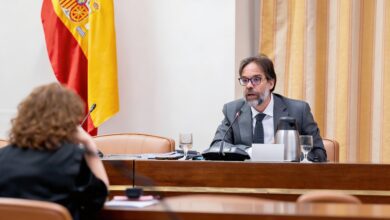
In Madrid this week, the National Court once again turned its attention to the Pujol family case, which has sparked heated debate in Spain for several years. At the hearings, the eldest son of the former head of Catalonia, Jordi Pujol Ferrusola, attempted to distance his father from longstanding suspicions of holding funds abroad. He stated that Jordi Pujol, excused from participation in the proceedings due to health reasons, never had accounts outside the country.
Money in Andorra and the family conflict
The key question for the court is the origin of the substantial fortune that the Pujol family kept in Andorran banks for more than thirty years. According to the defendant, these funds were part of an inheritance left by his grandfather, Florenci Pujol, back in 1980. In the early 1990s, it was Jordi Pujol Ferrusola who took charge of managing these assets, and later each of the seven children and their mother opened their own accounts. He insists that all transactions during that period were solely related to financial products, not to business or politics.
The prosecution, however, doubts this version. The investigation believes that part of the funds may have come from corruption schemes linked to contracts from the Catalan government. The defendant himself denies any connection between the family’s assets and his commercial projects, and also claims he had no dealings with government bodies.
Transactions and movement of funds
Jordi Pujol Ferrusola gave a detailed account of how he managed the family’s accounts: investing in various financial instruments, distributing income among his brothers and sisters, and after 2000, each family member controlled their share independently. He emphasized that the money was never idle, but constantly involved in new operations—from investments in foreign products to financing agricultural projects in different countries.
The hearings also addressed internal family conflicts. In particular, the defendant explained why bank documents mentioned his father as the supposed owner of one of the accounts. According to him, this was done solely to protect the funds during a dispute with his former wife, Mercè Gironès, and did not reflect the actual situation.
Banks and pressure on the family
After the merger of Banca Reig and the creation of Andbank, the Pujol family faced the bank’s refusal to service their accounts. According to the defendant, this was due to new requirements for ‘politically exposed persons.’ However, the bank’s representative testified that the family had asked for the account documents to be destroyed. As a result, the funds were transferred to Banca Privada de Andorra, where they remained until compromising materials were published in the media, which led to a public confession and the start of an investigation.
In Spain, the issue of hidden capital and offshore accounts regularly attracts public and judicial attention. Questions about the origin of large fortunes and their legalization concern not only politicians but also ordinary citizens. For example, there was a recent discussion on the eligibility requirements for special pensions for women without employment history — more details can be found in the article about allowances for housewives in Spain.