Spanish Farmer Refuses to Sell Harvest: Why Cucumbers Go to the Goats. Agribusiness in Spain faces a crisis: farmers like Ainhoa choose to feed their livestock vegetables rather than sell them at a loss. Rising costs and market pressures threaten traditional agriculture.
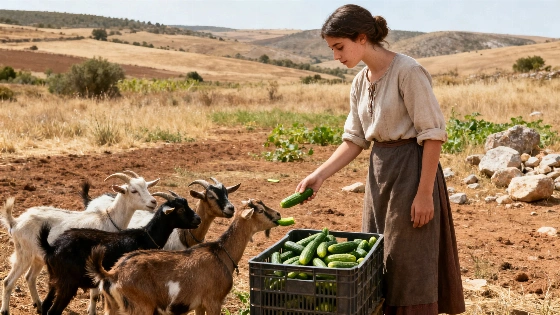
Ainhoa, a young farmer from Spain, openly stated: selling cucumbers for 10 cents per kilogram means working at a loss. Instead of giving away her harvest for next to nothing, she decided to feed it to her goats. This move has become a symbol of growing discontent among farmers, who are increasingly unable to cover even the basic costs of production.
Agriculture remains an important part of the country’s economy, but today farmers are forced to battle not just the weather, but economic realities as well. Prices for fertilizers and fuel continue to rise, while bureaucratic requirements and competition from imported goods make working the land less and less attractive. As Ainhoa notes, each harvest takes months of effort and investment, which do not pay off at the current purchasing prices.
Prices below cost
In her video, Ainhoa does not hide her frustration: “If cucumbers are worth 10 cents, I would rather have my goats eat them.” Her words resonate with many of her colleagues. Similar stories are happening with other crops — for example, in La Rioja, farmers are already dumping tomatoes rather than selling them at a loss. This situation highlights a systemic problem: the market sets prices that do not even cover minimum costs.
Rising costs and market pressure
The main reasons for the crisis are the constant rise in prices for fertilizers, energy, and logistics, as well as increased competition from countries with lower production costs. Additional uncertainty is brought by the upcoming enforcement of the agreement between the EU and Mercosur, which could hit Spanish producers even harder. As a result, many farms are on the brink of closure.
According to Talent24h data, farmers cite four key issues: procurement prices below production cost, rising expenses, bureaucratic pressure, and instability due to external competition. All this is leading to the traditional agricultural model in Spain losing its sustainability.
What farmers are demanding
Ainoa emphasizes that her decision is not an act of desperation, but a form of protest against a system in which the work of agricultural workers is undervalued. She calls for respect for farm labor and fair conditions so that farmers can not only survive, but also thrive. Among the main demands are revising pricing policies, reducing administrative burdens, and protecting the domestic market from dumping.
The problem of unprofitable prices for agricultural products is not new. Other sectors of Spain's economy have also reported cases where producers are forced to change their strategy due to market pressure. For example, the closure of the historic Lagarto factory in Zaragoza is connected to similar economic difficulties and production restructuring.
The situation with Ainoa’s cucumbers is just one example of how modern market conditions are casting doubt on the future of traditional Spanish agriculture. If this trend continues, many small and medium-sized farmers may be forced out of the market entirely, putting the diversity and quality of local products at risk.