Foreign Minister Albares attributes the mass entry of migrants into Ceuta to viral misinformation online. He defends Morocco’s cooperation and rejects calls to review diplomatic ties. Political tensions rise in Madrid.
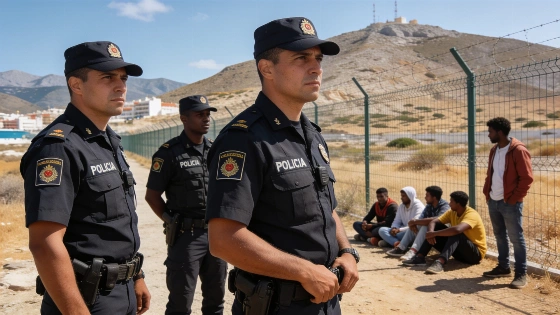
Spanish Foreign Minister José Manuel Albares has placed full responsibility for the recent mass entry of migrants into Ceuta on the rapid spread of false information across social media, distancing Morocco from any blame. Speaking before the Foreign Affairs Committee in Congress, Albares argued that the unprecedented influx—estimated at 720,000 people—was triggered solely by viral rumors and misleading content online, particularly regarding a Supreme Court ruling on maritime entries.
Albares emphasized that Morocco’s cooperation was essential in managing the crisis, highlighting that diplomatic dialogue enabled the swift return of 90% of those who entered Ceuta on July 30 within 48 hours. He also credited joint efforts for preventing a repeat incident on August 15, despite renewed calls on social platforms for another mass crossing. The minister insisted that maintaining strong diplomatic channels with Morocco is crucial, especially given the shared border and the need for coordinated responses to such emergencies.
Despite mounting pressure from some parliamentary groups, including Sumar and its allies, who accuse the government of weakness for not directly addressing Morocco’s potential role, Albares refused to suggest any hybrid attack or deliberate involvement by Rabat. Instead, he praised Morocco’s actions and dismissed any notion of diplomatic review, stating that his priority is to defend Spain’s interests through dialogue and discretion.
Albares detailed how the crisis escalated: a video of two young women swimming into Ceuta went viral on July 28, amplified by Moroccan media and influencers, ultimately reaching an audience of 30 million—mainly in Morocco. This fueled the explosive spread of the false claim that Spain’s borders were open and that maritime entrants would not be expelled. Throughout his account, Albares made no suggestion that Moroccan authorities played a part in spreading these rumors.
When challenged over his perceived lack of firmness, Albares insisted that diplomatic discretion should not be mistaken for weakness. He reaffirmed that Spain’s territorial integrity and sovereignty over Ceuta and Melilla are non-negotiable, sending a clear message to Rabat that these cities are and will remain Spanish and European, with no room for discussion on their status.
The minister also warned of a broader campaign of disinformation, describing how international far-right networks exploited the Ceuta crisis to destabilize and divide Europe. He cited the activity of global social media accounts, including those of high-profile figures like Elon Musk, whose posts reached hundreds of millions. According to Albares, these efforts aimed to fuel division and amplify the narrative of a security collapse, with significant participation from both Spanish and American users. He noted that the European Commission has since engaged with digital platforms to prevent similar incidents and combat the spread of false news.
Albares expressed frustration with Italy and Denmark for what he described as a lack of solidarity during the crisis, especially given Spain’s consistent support for their own migration and territorial issues. The situation in Ceuta has drawn international attention, with ongoing debates about the adequacy of Spain’s response and the role of misinformation in shaping public perception. For further context on the challenges faced by Ceuta’s security forces during the migrant influx, see this detailed report on rising violence and resource gaps.
Ceuta and Melilla have long been focal points in Spain’s migration policy, serving as the EU’s only land borders with Africa. The recent crisis has reignited discussions about border management, the influence of digital platforms on migration flows, and the complexities of Spain’s relationship with Morocco. As the government continues to navigate these challenges, the debate over diplomatic strategy and national security remains at the forefront of Spanish politics.