Amnesty International has identified 87 people connected to killings during protests in Iran, following the death of Mahsa Amini in police custody. The case remains under close human rights scrutiny.
Amnesty International has published a new investigation naming 87 individuals it holds responsible for killings during the protests that broke out in Iran after Mahsa Amini's death. The report comes as the fourth anniversary of Amini's death in police custody approaches, renewing attention on the Iranian authorities and ongoing calls for accountability.
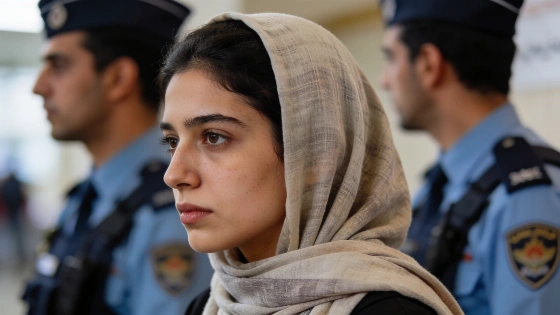
Mahsa Amini, a young woman detained by Iran's Morality Police for allegedly wearing her burka incorrectly, died in custody. Her death sparked protests across the country and drew international focus to Iran's human rights record and the actions of its security forces. Amnesty International's September 2026 report states that at least 377 protesters and bystanders, including 56 children, were killed in the crackdown that followed. These figures have been independently confirmed by outlets such as The Guardian and CBC.
Of the 87 individuals identified by Amnesty International, 62 are security commanders and 25 are officials from the Ministry of Interior, with 10 at the national level and 77 at regional or local levels.
In Spain, journalist Marta García Aller interviewed Esteban Beltrán, director of Amnesty International in Spain, about the findings. Amnesty says its investigation was exhaustive, aiming to clarify responsibility and seek justice in a case that still resonates far beyond Iran. The report also documents systematic torture and sexual violence against protesters and detainees, carried out through a coordinated chain of command.
Naming these 87 individuals is a step toward justice for those killed in the protests after Amini's death. Amnesty International stresses the need for transparency and accountability in cases of state violence, especially when law enforcement actions result in deaths. The list includes high-ranking figures such as Ali Khamenei, Mohammad Bagheri, Ahmad Vahidi, and Majid Mir-Ahmadi, showing how responsibility extends across Iran's leadership.
While the report does not mean immediate legal action for those named, it increases pressure on Iranian authorities and highlights the ongoing work of human rights groups to document abuses. Amnesty International has called on the United Nations to set up an international criminal justice mechanism for Iran, arguing that current domestic and international options are not enough. The case of Mahsa Amini remains a symbol of the risks faced by women and activists in Iran, and the international community continues to watch closely. Naming those allegedly responsible is a reminder that, even years later, the demand for justice has not faded.
Amnesty International directly links the crackdown on protests to the death of Mahsa Amini in September 2022 and the subsequent 'Woman, Life, Freedom' movement, noting that the repression became one of the most thoroughly documented episodes of violence in Iran in recent years. The organization stresses that without an external justice mechanism, those responsible are likely to remain unpunished.
Amnesty International