Why Housewives in Spain Have Started Putting Foil in Kitchen Drawers. Kitchen drawers quickly accumulate crumbs, grease, and moisture, which can damage the furniture and make cleaning more difficult. Regular aluminum foil helps solve this problem: it protects the bottom of the drawer and makes kitchen maintenance easier.
Crumbs, oil stains, and accidentally spilled spices are common in kitchen drawers. Even if the furniture looks tidy, dirt quickly accumulates inside, and unnoticed moisture can lead to stains, swelling, or even mold. To avoid extra cleaning and prolong the life of their furniture, many homemakers in Spain have started using a simple trick: lining the bottom of their drawers with regular aluminum foil.
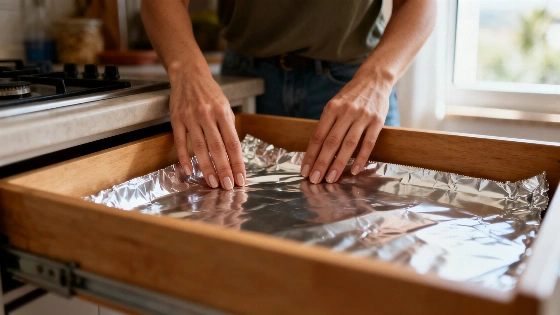
Foil acts as a barrier between the base of the drawer and anything that might get on it — from food residue to condensation. No glue or tape is needed: simply lay the sheet neatly on a clean, dry surface so it doesn't shift under the weight of dishes and food. The main thing is to ensure no moisture is left under the foil; otherwise, the effect will be the opposite, and the furniture may suffer even more.
Why you need foil in your drawers
The main purpose of foil is to insulate the bottom of the drawer from dirt, grease, and moisture. This is especially important in sections where open packages, spices, cloths, or kitchen utensils are stored and often come into contact with food residue. In areas near the stove or sink where steam accumulates, foil helps protect furniture from constant dampness and related problems.
If grease is spilled or grains scatter in the drawer, you just need to replace the foil with a new sheet — no need to wash the entire drawer. This method saves time and keeps things tidy with minimal effort.
How to properly line a drawer with foil
Before laying the foil, the drawer must be completely emptied and thoroughly wiped—especially in the corners, where dust and crumbs often accumulate. Then, cut a sheet of foil to fit the bottom, leaving a small margin along the edges. It is recommended to lay the foil shiny side up and press it carefully to the surface to avoid bubbles and wrinkles. After that, you can return the contents— the foil will stay in place due to the weight of the items.
In drawers used daily, foil should be replaced about once a month or more often if it becomes dirty, damp, or torn. The main thing is to focus not on the calendar, but on the condition of the lining.
Where foil is especially useful
Foil is particularly effective in drawers where spices, open packages, cloths, and kitchen odds and ends are stored, as well as in sections near the stove, oven, or sink. These areas are where stains and moisture most often appear. However, if the drawer has removable plastic organizers or is lined with an easy-to-clean surface, foil may not be as necessary—regular cleaning will suffice.
Common mistakes
The most common mistake is placing foil on a wet or dirty surface. In this case, water can accumulate underneath, causing unpleasant odors and even mold. Another problem is forgetting to change the foil when it gets dirty: then it stops serving its purpose and becomes a source of bacteria.
Foil and fighting insects
Sometimes the question arises whether foil helps protect against insects. According to Talent24h, foil does not repel pests, but it does make cleaning easier: its smooth surface prevents crumbs and food residues from accumulating in hard-to-reach places. And it is exactly these buildups that most often attract ants and cockroaches.
Other household uses
Aluminum foil has applications beyond just kitchen drawers. It is used to protect drain grates in the bathroom—reducing odors and preventing insects from entering the house. Wrapping the base of a mop with foil can make floor cleaning easier and help avoid streaks. Foil also helps extend the life of kitchen sponges if you wrap them to protect from moisture and bacteria.
Alternatives to foil
Instead of foil, you can use silicone or rubber mats, which are well-suited for storing heavy dishes and are easy to wash. There are also self-adhesive plastic covers—they are more durable, but cost more and are harder to replace. However, for quick and budget-friendly protection, foil remains one of the most convenient solutions.
Practical tips
Before laying out foil, always thoroughly clean and dry the drawer. Check the cover’s condition at least once a month, especially if the drawer is near a source of steam or used frequently. If the foil becomes dirty or wet, don’t postpone replacing it—this will help prevent unpleasant odors and keep your furniture in good condition.