The Nerva industrial landfill in Huelva will continue operating after a new permit. Authorities have not set a closure date, sparking criticism from locals and environmental groups. The site’s future remains unresolved.
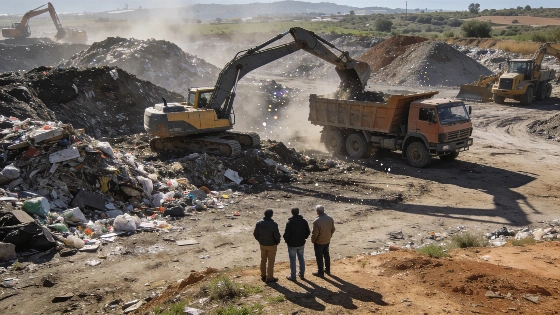
The Junta de Andalucía has granted the Nerva industrial landfill in Huelva a new permit to continue operations, but without specifying when the facility will finally close. The decision, which modifies the site’s environmental authorization, allows the landfill to remain active until an “orderly closure” is achieved, yet omits any concrete timeline for shutting down the controversial site. This move has reignited tensions in the town of Nerva, where residents have endured nearly three decades of complaints about odors and environmental risks linked to the landfill’s handling of hazardous and non-hazardous industrial waste.
The updated permit, approved for the facility operated by Diseño de Soluciones Medioambientales (DSM), restructures the landfill’s closure into four phases. It also introduces new waste treatment and recycling operations, aiming to reduce direct dumping and prioritize recovery and valorization of materials. However, the lack of a clear end date has drawn sharp criticism from both local officials and environmental organizations, who argue that the changes effectively prolong the landfill’s lifespan under the guise of circular economy reforms.
Local authorities, including Nerva’s first deputy mayor José Luis Lozano, have described the decision as a major setback for the community. Lozano questioned the timing of the announcement, which coincided with local festivities in August, and accused the regional government of acting with “premeditation and secrecy.” The town hall is now reviewing the resolution and plans to exhaust all available legal avenues to challenge the extension.
The new authorization outlines five main waste treatment units: a solid fuel plant using high-calorific non-hazardous waste for cement industry furnaces; a recycling and decontamination facility for contaminated scrap and packaging; a soil washing and bioremediation plant for excavated contaminated soils; a stabilization and solidification unit for reducing contaminant mobility; and a mechanical sorting and conditioning plant. The site will also manage up to 73,845 cubic meters of liquid effluents annually, with treated water intended for reuse within the facility and for maintaining vegetation on closed landfill cells.
One of the central elements of the permit is a new closure model for the landfill’s waste cells, but again, no deadlines are provided. The project does require a minimum 30-year post-closure monitoring period, during which environmental controls must be maintained. The resolution also adapts the landfill’s operations to current Spanish and Andalusian waste and circular economy regulations.
Environmental groups, including Ecologistas en Acción, have already announced plans to file an administrative appeal against the decision. They argue that, despite references to closure, the project will in practice extend the landfill’s activity for decades. The organization points out that several legal challenges related to the site are still pending in court, with proceedings set to resume in September. DSM, the company operating the landfill, has declined to comment while it reviews the details of the new permit.
As part of the new requirements, DSM must organize public information sessions for residents of Nerva and neighboring towns before resuming activity. These sessions are intended to explain compliance with sector regulations, especially regarding odor and noise, and to address other issues outlined in the permit conditions.
The Nerva landfill has been a source of controversy for years, including a 2022 incident involving the bulk transfer of 38,000 tons of abrasive material from Montenegro, which was halted by the Spanish government. In 2023, the Junta ordered the closure of all hazardous waste cells after imposing a €1.68 million fine for exceeding capacity by nearly three million tons—though this penalty was later annulled following a company appeal. The ongoing debate over the landfill’s future echoes broader tensions seen in other Spanish regions, where local communities and authorities often clash over environmental management, as highlighted by the government’s recent centralized response to the Ceuta migrant crisis (see how national intervention shaped local outcomes).
Spain’s waste management sector faces increasing scrutiny as the country adapts to stricter EU environmental standards and growing public demand for transparency. The Nerva case underscores the challenges of balancing industrial needs, regulatory compliance, and community concerns in regions where environmental legacies remain unresolved.