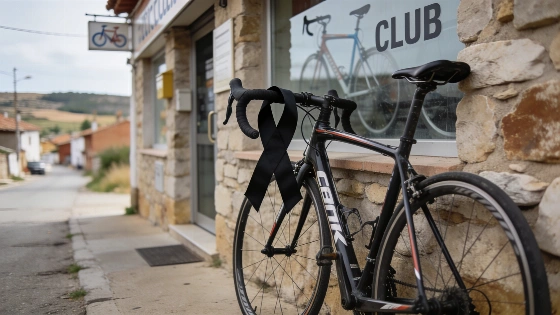
Ángel Arroyo has died in Ávila at 70. His career included a Vuelta lead erased by a doping sanction and a historic second-place finish in the Tour de France.
A positive test changed Ángel Arroyo's place in the 1982 Vuelta Ciclista a España. The former professional cyclist died at the Complejo Asistencial de Ávila after nearly two weeks in hospital. He was 70.
Arroyo had been dealing with a serious illness diagnosed six months ago. RTVE confirmed that he was born in El Barraco, Ávila, and reported that he had spent the weeks before his death in hospital.
His career carried a difficult question. Arroyo led the Vuelta in 1982, then tested positive in a control during the seventeenth stage. Officials gave him a 10-minute penalty. He fell to thirteenth place in the general classification.
Several accounts say he had initially won the race before losing the title. Arroyo always denied that he had doped.
In 1983, Arroyo helped the Spanish cycling scene reach the Tour de France podium for the first time. Movistar Team later recalled that achievement when describing him as a legend of Spanish cycling.
His next major result was clear. In 1983, Arroyo finished second in the Tour de France behind Laurent Fignon. That result placed him among the leading Spanish riders of his generation and gave Spain a prominent figure on the international stage.
EFE, Cadena SER and La Voz de Galicia all identify the runner-up finish as the defining result of his career. It was the strongest undisputed performance he produced.
Arroyo was born in El Barraco, Ávila, in 1956. The town also produced Carlos Sastre, José María Jiménez Sastre, known as 'El Chava', and Francisco Mancebo. His sporting identity remained tied to the province and to the period when Spanish cycling began to gain ground in the major stage races.
The Spanish Cycling Federation described Arroyo as one of the key figures of Spanish cycling in the 1980s. His achievements helped anticipate the later rise associated with Pedro Delgado and Miguel Induráin.
From 1979 to 1989, he rode as a professional. Arroyo spent those years with the historic Reynolds team alongside Pedro Delgado and Rubén Gorospe. He retired at the start of the era later linked to 'Perico' Delgado, Miguel Induráin and Alberto Contador.
Ávila has also begun preparing his farewell. The Ayuntamiento de Ávila sent condolences to his family and friends. The capilla ardiente is due to open at midday on Monday in the palacio de Superunda.
EFE and Europa Press reported that the city authorities and the Diputación de Ávila confirmed the arrangements. The same venue hosted the farewell for Julio Jiménez in June 2022.
Mayor Jesús Manuel Sánchez Cabrera called Arroyo a reference point for cycling in Ávila and across Spain. He declared two days of official mourning. The city flag will fly at half-mast.
His record cannot be reduced to the sanction that erased his 1982 Vuelta result. It cannot be separated from that episode either. The record contains both the controversy and the achievement that followed: second place in the Tour de France in 1983.
The Spanish Cycling Federation and international coverage in Le Figaro placed Arroyo among the figures who shaped Spanish cycling in the 1980s. EFE, Cadena SER and La Voz de Galicia also singled out his Tour result. His career carried both distinction and dispute.