Mass rallies held in Galicia in honor of Begoña Caamaño and the language. On Galician Literature Day, thousands of residents took to the streets. The memory of Begoña Caamaño and the defense of the language were at the center of attention. Authorities and activists called for unity and change.
On May 17, large-scale events took place in Galicia to mark Galician Literature Day. The main event was a public plenary session of the Royal Galician Academy (RAG) at the Santiago de Compostela theater, where writer and radio host Begoña Caamaño was honored. Her contribution to the development of the language and feminist thought was in the spotlight, not only for academics but also for the thousands of residents who gathered in the city's streets.
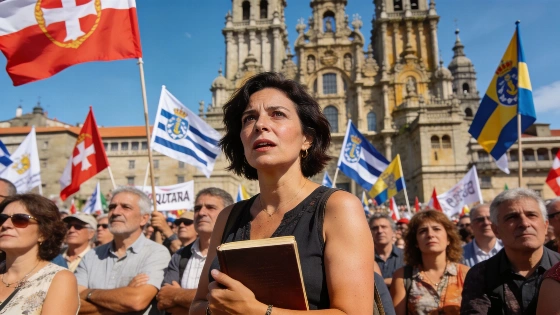
Alongside the official ceremonies in the historic center of Santiago, a mass demonstration under the slogan 'O galego, lingua vital' ('Galician, a vital language') took place. The organizers from the Queremos Galego platform called for urgent action to overcome the region's 'language crisis'. Demonstrators gathered at Quintana Square, demanding that authorities step up the protection and promotion of the Galician language.
At the RAG meeting, colleagues and friends of Begoña Caamaño spoke in detail about her life journey. According to poet and biographer Ana Romaní, Caamaño managed to combine a feminist agenda, criticism of traditional myths, and a deep commitment to the Galician language in her works. Her novels 'Circe ou o pracer do azul' and 'Morgana en Esmelle' became prominent in the region’s contemporary literature. Writer Marilar Aleixandre stressed that Caamaño reimagined classic images of women in Western culture, and her work stood out for its 'intellectual challenge' and 'ethical courage'.
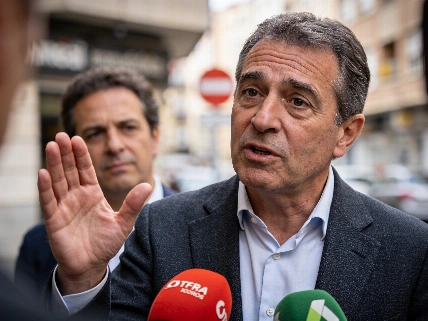
RAG President Enrique Monteagudo recalled that Caamaño grew up in a Spanish-speaking environment, but consciously chose the Galician language and became an active advocate for it. He called for unity and political support to preserve the linguistic heritage. The presence of the head of the autonomous region, Alfonso Rueda, added further significance to the event.
Begoña Caamaño's family also took part in the ceremony, which was the culmination of months of preparation, publications, and educational projects throughout Galicia. While recalling her biography, participants noted that the formation of the writer's civic stance began in childhood, when her family moved to the working-class neighborhood of Coia. Later, Caamaño actively participated in the Mulheres Nacionalistas Galegas movement and supported the Women's March.
During the discussion, there were calls for the development of public media and support for independent journalism in the Galician language. Ana Romaní noted that Caamaño's radio programs were marked by openness to new ideas and a desire for collective discussion of complex topics. Editor Víctor F. Freixanes believes that journalism was her first step towards understanding reality and finding her place in society.
Large-scale rallies in defense of the language and in memory of Caamaño continued the trend of recent years, as regions of Spain pay increasing attention to cultural identity and language rights. Similar developments are seen in other areas as well: for example, the recent decision to include women’s football matches in the national lottery, previously reported by russpain.com in the article about new rules for distributing income among women's clubs.
For reference: Galician Literature Day has been celebrated annually since 1963 and is dedicated to outstanding authors who have contributed to the development of the language. The Galician language is officially recognized in the autonomous community, but its use in everyday life and education remains a subject of public debate. In recent years, regional authorities have taken steps to support the language, but activists consider these measures insufficient. Begoña Caamaño, who passed away in 2014, remains a symbol of the fight for women's rights and Galicia’s cultural distinctiveness.