The Madrid regional government has granted a no-bid contract for the redesign of its main headquarters. The project, valued at nearly €60,000, precedes planned works estimated at €1.65 million. The process and scale have sparked debate.
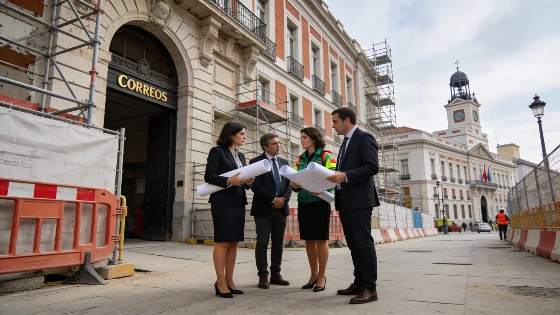
The Community of Madrid has quietly advanced a major renovation of its iconic Real Casa de Correos, awarding the design and project management contract without a public tender. The contract, published this Friday, assigns nearly €60,000 to the studio of Alejandra Pombo, a well-known interior designer and sister of influencer María Pombo. This move comes as the regional government, led by Isabel Díaz Ayuso, prepares for works expected to cost around €1.65 million, though the current contract covers only the design phase and not the actual construction.
The official justification for bypassing a competitive process centers on the building’s unique status. The Real Casa de Correos, a protected cultural landmark with historic artworks and valuable interiors, is described by the regional authorities as requiring a “unique artistic intervention.” The government argues that the complexity and sensitivity of the site demand a specialized approach, combining restoration, modernization, and institutional image, which they say justifies direct contracting.
The planned works will affect both the ground floor’s interior courtyards and the north wing of the second floor, where President Ayuso’s office is located. In total, the renovation will cover 710 square meters on the ground level and 1,136 square meters on the second floor. The timeline foresees three months for drafting the project, four months for obtaining permits and awarding the construction, and twelve months for the actual works, totaling 19 months from start to finish.
In anticipation of the disruption, the government previously acquired a penthouse in Chamberí for €6.3 million through the public company Planifica Madrid. The property, nearly 500 square meters of living space plus 200 square meters of terrace, was presented as a temporary venue for meetings during the renovation. However, until now, no details of the planned works had been made public, raising questions about the necessity and transparency of the purchase.
Alejandra Pombo’s studio is no stranger to high-profile public projects in Madrid. The firm was responsible for the transformation of the gastronomic spaces at the Palacio de Cibeles, including the Cornamusa restaurant, Azotea Cibeles, and Café Cibeles. The regional government maintains that Pombo’s experience and the artistic demands of the Real Casa de Correos justify the direct award.
The last major investment in the building was the 2025 facade restoration, which cost €963,197.17 and included repairs to the roof and decorative elements. That project was linked to the 40th anniversary of the building serving as the seat of the regional government. The current renovation, however, is more extensive and has reignited debate over public spending and procurement practices in Madrid.
Madrid’s approach to managing its historic buildings has drawn attention in recent years, especially as other Spanish cities have faced similar challenges balancing heritage preservation with modernization. For example, the transformation of Seville’s city government under Luis Uruñuela in the late 1970s set a precedent for ambitious municipal reforms, as detailed in this report on Seville’s political changes. The ongoing works at the Real Casa de Correos highlight the complexities and controversies that can arise when public institutions invest in their own infrastructure.
Spain’s public procurement laws allow for direct awards in cases deemed to require unique expertise or artistic input, but such decisions often attract scrutiny. The Real Casa de Correos, located in Madrid’s Puerta del Sol, is not only a symbol of regional power but also a focal point for civic life and tourism. Any significant alteration to its structure or use is likely to remain under close public and media observation as the project progresses.