Barcelona’s La Boqueria market will undergo a major renovation. The city aims to restore its local food focus and reduce tourist-oriented stalls. New rules and a €12 million upgrade are planned.
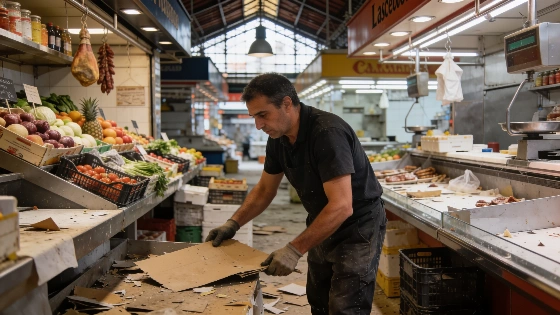
Barcelona’s most famous market, La Boqueria, is set for a sweeping transformation as city authorities move to restore its traditional role for local residents. The upcoming changes, announced by the City Council and the Municipal Markets Institute, will sharply reduce the number of stalls selling ready-to-eat foods aimed at tourists, shifting the balance back toward fresh, local produce and neighborhood shoppers.
The new commercial regulations, approved by the Boqueria Vendors Association last year, will require each food sector—whether fish, meat, charcuterie, fruit, vegetables, or bakery—to maintain a strict 50/50 split between traditional products and prepared foods. This rule is designed to curb the recent surge in stalls offering items like paella portions, fried chicken, sandwiches, churros, and other snacks that have come to dominate the market’s tourist trade. While some traditional prepared foods, such as cooked legumes or butcher’s skewers, will remain, the focus will shift away from mass-market tourist fare.
According to Màxim López, head of the Municipal Markets Institute, the goal is to ensure that every market in the city offers both fresh, local products and a reasonable selection of prepared foods for residents. However, at La Boqueria, vendors who focus solely on food for immediate consumption will now be required to also sell products tied to their specialty, reinforcing the market’s original character. Deputy Mayor Raquel Gil emphasized that the city wants to “change the narrative and perception of La Boqueria,” noting that the new rules received overwhelming support from vendors.
The physical renovation, with a budget of €12 million, will begin after the summer. Initial works will target improved lighting in the logistics area and new public restrooms, followed by a redesign of the fish section. The market will remain open throughout the process, with the most significant construction—such as replacing the asbestos roof, reinforcing the structure, and upgrading installations—scheduled between 2027 and 2029. The final phase will include a revamp of the Gardunya Square entrance and façade, which is heavily used by local residents.
These changes come as Barcelona continues to address the challenges of balancing tourism with local needs. The city’s approach echoes broader efforts to manage the impact of mass tourism, as seen in other recent municipal initiatives. For example, the government’s decision to centralize crisis management in Ceuta, led by Ángel Víctor Torres, reflects a similar drive to protect local interests while responding to external pressures. More details on this strategy can be found in the report on Spain’s new approach to the Ceuta migrant crisis.
La Boqueria’s overhaul is part of a wider trend among European cities to reclaim public spaces and traditional markets from the pressures of global tourism. The market, located on La Rambla, has long been a symbol of Barcelona’s culinary heritage. By enforcing stricter rules on product offerings and investing in infrastructure, city officials hope to ensure that La Boqueria remains a vibrant hub for local food culture, rather than a tourist attraction dominated by fast food and snacks. The changes are expected to become visible by next summer, with full implementation following the completion of the renovation works.
La Boqueria is one of Europe’s oldest and most visited markets, attracting millions of visitors each year. Its transformation is likely to influence how other Spanish cities manage the balance between tourism and local life. The new regulations and investment signal a clear intent: to preserve the market’s identity as a neighborhood food destination while adapting to the realities of a changing city.