Barcelona’s iconic attractions are being reshaped by influencer marketing. Social media now drives tourists to the same landmarks and a new wave of globalized cafés. Local businesses adapt, but the city’s unique flavor risks dilution.
Barcelona’s most famous sights are experiencing a new kind of popularity, as influencers on Instagram and TikTok turn the city’s classic landmarks and trendy cafés into must-visit destinations for global tourists. The promise of “hidden gems” and “authentic experiences” is now a central part of the city’s online image, but in reality, visitors are often guided to the same well-known monuments and a rapidly homogenizing food scene.
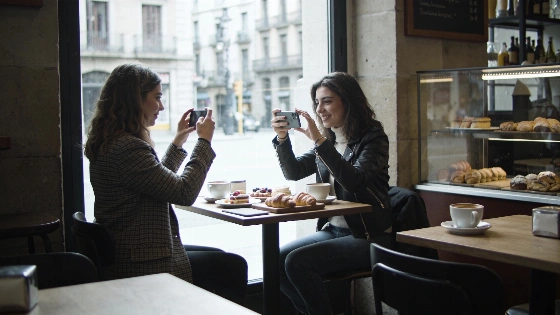
Short videos and curated posts highlight not only the Sagrada Familia, Casa Batlló, and Parc Güell, but also a growing list of specialty coffee shops, brunch spots, and artisan bakeries. Many of these venues offer menus nearly identical to those found in other major cities, with avocado toast, matcha drinks, and modern interiors becoming the new standard. Influencers such as Lidia Izquierdo, who has built a large following, openly acknowledge the commercial side of their recommendations, noting that paid collaborations with restaurants and cafés are now a key source of income.
For local businesses, especially new establishments, visibility on social media is crucial. Many actively seek partnerships with influencers to attract attention and drive foot traffic. The content produced often includes practical tips, such as the best metro exit for a perfect photo or what to expect from a nighttime visit to a Gaudí house. However, the focus on lifestyle and curated experiences means that the recommendations rarely reflect the daily reality or budget of most Barcelona residents.
Many influencers do not live in Barcelona year-round and present themselves as lifestyle or fashion creators rather than tourism specialists. Their content ranges from newly opened brunch cafés to pilates studios and promotional massages, painting a picture of city life that is often out of reach for locals. While creators claim to share their genuine experiences, the commercial nature of their work sometimes requires them to promote venues they might not personally choose, relying on online reviews to ensure quality.
According to the 2025 Barcelona tourist survey, one in four visitors used social media or blogs to plan their trip, with Instagram and TikTok leading the way. Food and drink play a significant role, as over half of tourists reported visiting bars or cafés during their stay—establishments that dominate influencer recommendations. Influencers like Gabriele Pletaite, who shares her Barcelona life with over 100,000 followers, note that much of their audience is based outside the city, using their content to plan future visits and seek out places that feel both novel and comforting.
Researchers Pascale Joassart-Marcelli and Fernando J. Bosco describe this trend as “foodification”—the transformation of neighborhoods through a proliferation of restaurants and specialty shops aimed at outsiders. Their comparative study of cities like Buenos Aires, Los Angeles, and Paris found that these new businesses, while marketed as local and authentic, often replicate similar concepts and attract young, cosmopolitan consumers with higher spending power. In Barcelona, areas like Barceloneta have seen traditional eateries and markets rebranded as “authentic” while new venues reinterpret local identity to appeal to visitors, especially along the Joan de Borbó promenade, now lined with paella restaurants targeting tourists rather than residents.
This shift has prompted some influencers to reconsider their role in promoting a standardized food scene. Gabriele Pletaite, for example, has limited her collaborations with brunch cafés, choosing instead to focus on cultural content. She points out that the cost of trendy brunches far exceeds that of traditional local cafés, raising concerns about the changing character of Barcelona’s neighborhoods.
While Barcelona’s transformation under the influence of social media is not unique—similar patterns are seen in other European cities—the scale and speed of change are notable. The city’s global image is increasingly shaped by digital trends, sometimes at the expense of local distinctiveness. As influencer-driven tourism continues to grow, the challenge for Barcelona will be to balance international appeal with the preservation of its authentic urban life. This dynamic echoes broader debates about tourism and local identity, as seen in other Spanish cities facing their own pressures, such as the situation on Ceuta’s beaches where hundreds of migrants await decisions on their future, highlighting the complex realities behind the country’s most visible destinations. For more on this, see the recent coverage of migrants stranded on Ceuta’s Trampolín Beach.
Barcelona remains one of Europe’s top tourist destinations, drawing millions each year. The city’s authorities have introduced measures to manage visitor flows and protect residential life, including restrictions on short-term rentals and new regulations for tour groups. However, the influence of social media continues to reshape expectations and behaviors, making it increasingly difficult to distinguish between genuine local culture and curated experiences designed for global consumption. As the city adapts, the debate over what makes Barcelona unique is likely to intensify.