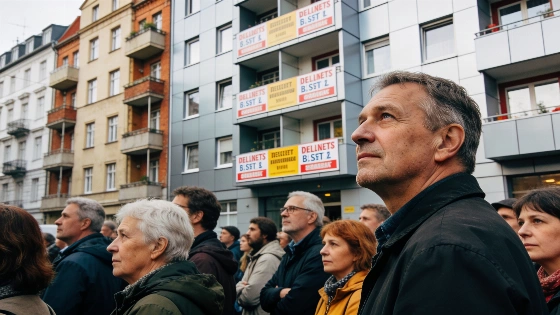
Berlin heads into a tense regional election. The housing shortage could put La Izquierda in power for the first time, while AfD’s rapid rise adds new pressure to a divided city.
Berlin is heading into a closely fought regional election, with the city’s housing crisis pushing La Izquierda to the front of the race. Their candidate, Elif Eralp, could become the first German-Turkish mayor in Berlin. Meanwhile, the far-right AfD is on track to double its support, threatening the city’s usual political balance.
Recent polls put La Izquierda and the conservatives nearly even, each around 20 percent, with AfD just behind at 18 percent. The Greens are also still in the running. AfD’s rise follows their win in Saxony-Anhalt and has left left-leaning parties scrambling to mobilize voters worried about the far right’s momentum. According to BerlinTrend and Forsa polls reported by Deutsche Welle, about 32% of Berliners now name the housing crisis as the city’s biggest problem, well ahead of concerns about migration or security.
Roughly 85% of Berliners are renters, making the city one of the largest rental markets in Europe and amplifying the political impact of rising rents.
— Le Monde
Housing dominates the campaign. More than 80 percent of Berliners rent, and average rents have jumped 69 percent since 2016. With lower salaries and a 10.6 percent unemployment rate, many struggle to find affordable places to live. La Izquierda has made this crisis their main issue, calling for the transfer of properties from large landlords like Deutsche Wohnen—who own over 100,000 apartments in Berlin—into public ownership, following the 2021 referendum result. The debate over expropriating major landlords remains heated and divisive, as reported by French and German media.
Berlin’s population has grown by nearly half a million since 2011, reaching 3.9 million, but new housing and infrastructure haven’t kept up. The city’s public debt now stands at over 69 billion euros, making it even harder to address the shortage. The arrival of refugees from Syria and Ukraine, along with other migrants, has added to Berlin’s diversity—41.7 percent of residents are foreign-born or have a migration background, including Eralp. Demographic reviews and official statistics show this rapid growth has put more pressure on housing and social services.
Recent polling by Infratest dimap and ZDF/Forschungsgruppe Wahlen shows a near three-way tie between Die Linke, CDU, and AfD, each polling between 17% and 23%. This marks a dramatic rise for AfD, whose support in Berlin has nearly doubled since the 2023 election, according to summary reports from leading German research organizations.
AfD’s momentum is strongest in eastern districts like Marzahn-Hellersdorf, where support could rise from 19.2 percent to as high as 36 percent. These neighborhoods, with long rows of East German-era Plattenbauten and few leisure options, have become a base for AfD’s message. Some residents there point to immigration and housing as their main worries, even though the share of foreigners is lower than in other parts of the city.
Frustration with the current conservative-led government has also shaped the race. Outgoing mayor Kai Wegner was criticized for his response to a recent blackout during a cold snap, and Stefan Evers has now replaced him as the conservative candidate. Many voters are fed up with broken promises on education and housing, which has boosted support for both AfD and left-wing parties.
Social Democrats in areas like Marzahn-Hellersdorf say they are losing voters to AfD, who have shifted debates toward emotional issues like fear and resentment. Some former SPD supporters now argue that too much money goes to foreign and queer issues instead of working-class Berliners. Still, not everyone is convinced by AfD’s rhetoric. Older voters, remembering the destruction of World War II, warn against letting the far right gain ground and urge Berliners not to forget the past.
This election is more than a local contest. It will test how Europe’s biggest cities handle social change and political division. The result will decide who leads Berlin, and whether the city’s tradition of diversity and openness can hold up against the rise of populist forces.