A Boeing 737-800 operated by Ethiopian Airlines missed its descent into Addis Ababa after losing contact with air traffic control. The airline admits a communication lapse but has not confirmed reports that both pilots were asleep. The incident has renewed concerns about pilot fatigue and flight safety.
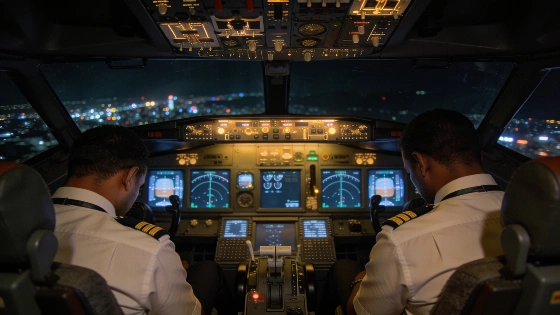
When a Boeing 737-800 failed to descend over Addis Ababa’s Bole International Airport, air traffic controllers were left without a response from the cockpit. Ethiopian Airlines flight ET343 held its cruising altitude of 37,000 feet and did not answer repeated calls from the ground. For more than 25 minutes, the cockpit stayed silent as the jet circled above its destination, raising immediate questions about the crew’s alertness and the airline’s safety procedures.
Flight data from Flightradar24 shows the aircraft left Khartoum at 01:26 UTC on August 15, 2022, and reached Addis Ababa at 02:51 UTC. Instead of starting its descent, the plane continued on autopilot, passing directly over the airport. The pilots reportedly responded only after the autopilot disengaged and a cockpit alarm sounded, reestablishing contact and preparing for a safe landing at 03:16 UTC.
В конце августа 2026 года Ethiopian Airlines объявила о запуске нового грузового рейса между Чэнду и Аддис-Абебой, что подтверждает её статус крупнейшего авиаперевозчика Африки.
Initial reports suggested both pilots were asleep at the controls and woke only when the alarm went off. Ethiopian Airlines has not confirmed this. In a statement days after the incident, the airline acknowledged a temporary loss of communication but did not address whether crew fatigue or inattention played a role. The company said the flight landed safely and that the crew was suspended pending an internal investigation.
What is clear is the risk created by the lack of cockpit response. While the aircraft stayed stable on autopilot, the absence of human oversight during a critical phase of flight—especially above a busy international airport—raises serious operational concerns. The airline has not said how many passengers were on board, and official findings from the investigation have not been released.
Fatigue among commercial pilots is a known hazard. A scientific review in Frontiers in Physiology found that between 68% and 91% of airline pilots have reported feeling fatigued on the job. The timing of the incident—just before 6 a.m. local time—falls within the hours when people are most prone to sleepiness, a fact recognized by the International Civil Aviation Organization. Still, without the results of the airline’s inquiry, it is not possible to say for certain that fatigue was the cause of the silence in the cockpit.
В Европе правила EASA допускают контролируемый отдых пилотов в кабине, но только при строгих условиях: не более 45 минут, из которых фактический сон не должен превышать 30 минут, после чего требуется обязательный период восстановления. Это подчеркивает, что усталость экипажа рассматривается как управляемый, но серьезный риск для безопасности полетов.
Ethiopian Airlines has avoided addressing the main question—whether both pilots were asleep. This reluctance is common in the industry, where crew exhaustion is often downplayed. The lack of transparency does little to reassure passengers or regulators, especially when the available evidence points to a lapse in cockpit vigilance. Until the full investigation is released, the incident is a reminder that even with modern technology, human factors can still threaten flight safety. The airline’s limited response leaves open questions about how it handles fatigue and safety culture.