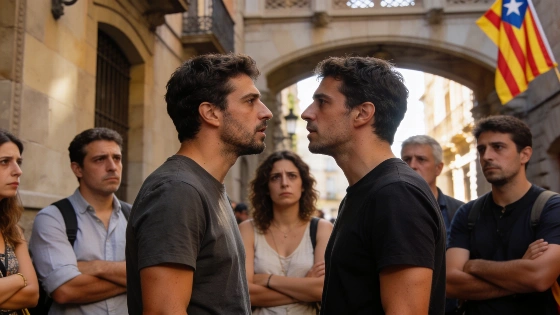
Recent violence at the Fossar de les Moreres has exposed how political extremes fuel public anxiety. Catalonia’s Diada, once a symbol of unity, now risks being overtaken by those who profit from chaos. The real cost may be a society gripped by fear.
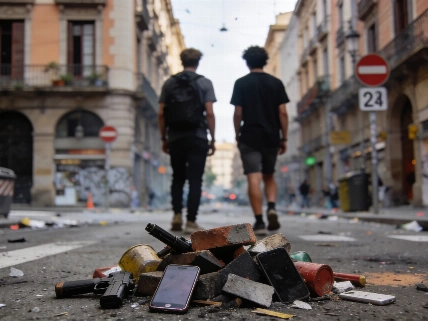
Diada in Barcelona used to be a day for shared identity. Now it feels more like a stage for people eager to turn every problem into a crisis. The unrest at the Fossar de les Moreres did not come out of nowhere. It followed a steady campaign by political extremists, who amplify each incident and try to convince everyone that disaster is the new normal.
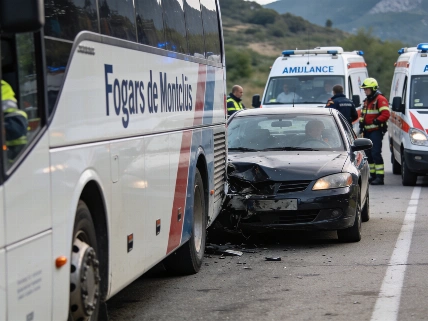
What was once a celebration of pluralism now risks sliding into open conflict. The recent violence was not random. It followed weeks of far-right groups citing local tragedies, including the homicide in Manresa and tourist thefts in central Barcelona, as proof that everything is falling apart. Their message is blunt: if nothing works, nothing is worth saving.
Information from several independent reports, around 2,500 protesters opposing Aliança Catalana gathered at the Fossar de les Moreres, far outnumbering the approximately 500 supporters of the party.
Professor José Cesar Perales from the University of Granada has seen this shift up close. He says the current wave of pessimism is unlike anything he remembers, even compared with the worst years of his youth in neighborhoods hit hard by heroin and HIV. Perales says people are now more frightened by what they hear than by what they actually experience. This fear is more than a side effect of social media: it is a tool for those who gain from instability.
Any attempt to talk about what still works in Catalan society is quickly dismissed. When Salvador Illa spoke at the Diada about the positives, he was called naïve. Josep Rull, president of the Parlament, faced similar pushback after his remarks at the Rafael de Casanova monument. In this atmosphere, constant talk of doom drowns out moderate voices.
Ahead of the Diada, Mossos d’Esquadra significantly increased security measures and closed access to the Fossar de les Moreres to prevent direct clashes. The move reflected authorities’ concern about possible escalation, as several Spanish media outlets reported.
The pattern is familiar: isolated incidents are magnified into sweeping claims, then used to justify further escalation. Extremists want people to believe violence at events like the Diada is inevitable and that tearing everything down is the only answer. This is not unique to Catalonia. As seen recently in Ceuta, similar tactics have kept communities elsewhere on edge.
The real risk is how quickly this story takes hold. When people accept chaos as normal, they become easy targets for those promising order through radical change. Catalonia’s recent history shows that collective mistakes cost individuals, and the idea that "the worse, the better" is a trap that leaves everyone worse off.
What remains is a society where fear is manufactured and hope mocked. Those who thrive on disaster turn every setback into proof that nothing works. Their vision leads nowhere. Catalonia’s challenge is to push back against this spiral and reclaim public space from those who profit from despair, while remembering that most people still want a future worth building.