Ceuta is under pressure after hundreds of migrants swam in overnight. The city’s president has called for a national emergency. Local services are stretched as arrivals continue for a second week.
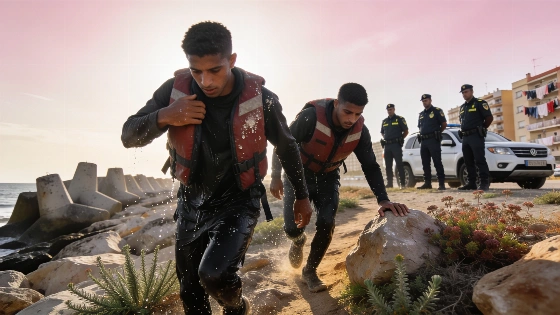
Ceuta is once again at the center of a migration crisis after hundreds of people, mostly young Moroccan men, entered the city by swimming along its coastline during the early hours of Thursday. The influx, which included some women, has pushed the autonomous city’s resources to the limit and prompted its president, Juan Jesús Vivas, to formally request the Spanish government declare a national emergency and assume direct control of the situation.
Over the past ten days, between 1,500 and 2,000 migrants have reached Ceuta by sea, according to official figures. Many of the arrivals have been observed making their way up the steep path to the city’s temporary reception center on Monte del Jaral, while others rest on sidewalks, check their phones, or gather in groups hoping for assistance. The local Guardia Civil and humanitarian organizations are working to provide immediate support, but the scale of the arrivals has overwhelmed existing facilities.
The situation has revived memories of the 2021 crisis, when thousands crossed into Ceuta in a single day. This time, the arrivals have been steady but relentless, with 40 to 50 new minors reportedly entering each night. The city is now struggling to accommodate both adults and unaccompanied minors, as the number of people needing shelter and care continues to rise.
Authorities attribute the surge to several factors, including the recent Supreme Court ruling that restricts immediate returns of migrants who reach Spanish soil without breaching border barriers. The court clarified that expedited rejection is only applicable to those who attempt to cross by overcoming physical border defenses, such as fences. This legal nuance may have contributed to the increase in attempts to reach Ceuta by swimming around the breakwater separating Morocco and Spain.
Efforts by the Guardia Civil, Salvamento Marítimo, and aid groups have focused on ensuring a humane reception for the new arrivals. However, some migrants, wary of being detained or returned, have fled into the hills rather than report to authorities. The pressure on local services is evident, with humanitarian organizations facing a daily challenge to provide food, shelter, and medical care.
The crisis has also brought tragedy. On Wednesday, the Guardia Civil recovered the bodies of two men who drowned while trying to reach Ceuta. According to official data, 29 people have died attempting the crossing so far in 2026. The ongoing emergency has led to calls for a unified national response, as highlighted in a recent report on the mounting pressure facing Ceuta’s authorities.
Ceuta’s unique position as a Spanish enclave on the North African coast has long made it a focal point for migration from Morocco and beyond. The city’s limited capacity to absorb large numbers of arrivals means that each new wave quickly strains its infrastructure. The current situation underscores the ongoing challenges faced by border regions in managing migration flows, balancing humanitarian obligations with security and logistical realities. As the summer progresses, local officials warn that further arrivals could deepen the crisis unless national authorities intervene decisively.