Ceuta’s main emergency migrant center has stopped new admissions. Hundreds remain on the streets, sparking protests from residents. Local authorities face mounting pressure as the situation escalates.
Ceuta’s largest emergency migrant facility in Loma Colmenar has reached capacity, leaving hundreds of recent arrivals stranded on city streets. The intake freeze, now lasting over a week, has intensified pressure on local authorities and fueled frustration among residents, who report a visible increase in people sleeping outdoors and occupying public spaces.
According to local neighborhood associations, the “embolsamiento” area—once a parking lot for vehicles waiting to cross into Morocco—now houses around 1,300 migrants. However, with the gates closed to new arrivals, an estimated 4,000 to 4,500 people, including minors and families, are left outside. Residents describe daily disputes over space and food, and some have organized peaceful protests demanding urgent action from the government.
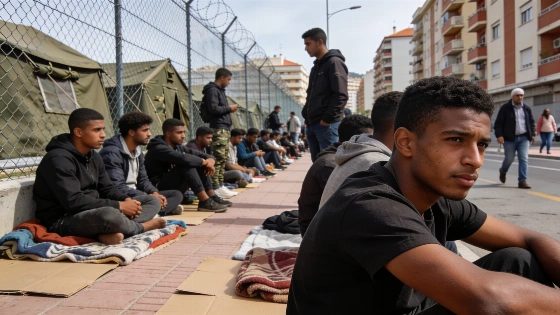
Many migrants, mostly from Morocco, have gathered near the facility’s perimeter, hoping for a chance to enter. Some say they were directed there by military personnel after being moved from beaches and other informal camps. The waiting lines have grown steadily since late August, with people camping on sidewalks, using makeshift bedding, and finding ways to pass the time—some offering haircuts or selling small items to others in the queue.
Inside the Loma Colmenar site, authorities have installed military tents, shaded areas, and basic sanitation, and construction is underway to expand capacity. Despite these efforts, the pace of admissions remains slow, and no clear timeline has been given for when new arrivals will be allowed in. Residents voice concerns about noise at night, the presence of children on the streets, and the lack of visible progress in resolving the crisis.
Among those waiting, young men like Aldellah Zahar and Otman, both from southern Morocco, express a strong desire to remain in Spain, stating they would rather risk everything than return home. Others, such as Issam, Usiel, and Yahia, have been waiting over a week at the front of the line, relying on food from local women rather than aid organizations. Fear of losing their place keeps them from leaving, even briefly.
The influx began in late July, with thousands entering Ceuta in a matter of days. Since then, public spaces—including parks, beaches, and residential areas—have seen a steady presence of migrants. While some residents acknowledge the difficult circumstances faced by newcomers, many are increasingly anxious about the impact on daily life and public order. The situation has led to repeated demonstrations, with police intervening to prevent escalation.
Similar tensions have been reported in previous months, as highlighted in coverage of recent protests over the migrant presence in Ceuta. The ongoing standoff underscores the challenges facing both local authorities and migrants, as infrastructure struggles to keep pace with demand and community relations remain strained.
Ceuta, a Spanish enclave bordering Morocco, has long been a focal point for migration into Europe. The city’s limited size—just 19 square kilometers—compounds the pressure on resources and public services. While the government continues to expand emergency facilities, the lack of a coordinated long-term solution leaves both residents and migrants in a state of uncertainty. The situation in Ceuta reflects broader migration pressures at Spain’s borders, where policy, humanitarian needs, and local realities often collide.