Spain's foreign minister confirmed all irregular migrants in Ceuta will be sent back to Morocco. The announcement has intensified anxiety among those waiting in harsh conditions. Many now fear imminent deportation.
Hundreds of migrants who recently swam from Morocco to Ceuta are now gripped by uncertainty after Spain's foreign minister, José Manuel Albares, publicly confirmed that all irregular arrivals will be returned to Morocco. The statement, delivered at a press conference, quickly spread among the migrants via WhatsApp and social media, fueling fears that their hopes of staying in Spain are fading fast.
For many, the announcement closed off the last possibility that bureaucratic or diplomatic obstacles might prevent their deportation. Albares emphasized that Spain and Morocco have reached a clear agreement: every person who entered Ceuta irregularly will be sent back, with Rabat expressing full willingness to cooperate and not demanding any concessions in return. The minister also noted ongoing daily discussions with his Moroccan counterpart, Naser Burita, underlining the seriousness of the plan.
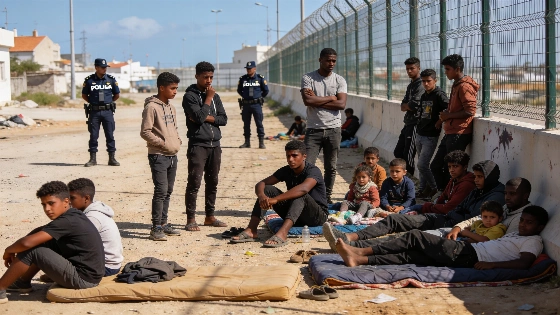
Among those affected is Siraj, a 16-year-old who has spent nearly two weeks in Ceuta after making the dangerous swim from Morocco. He has been waiting outside the local police headquarters each morning, hoping to be registered and gain access to Spain's child protection system. So far, he and hundreds of others have been left waiting in the sun, watched by police officers who prevent them from approaching the entrance. Many, like Siraj, are now reconsidering their options, with some expressing a reluctant willingness to return to Morocco and try to enter Spain legally in the future.
Conditions for the migrants remain dire. In the El Tarajal industrial area, groups sleep on thin mattresses or directly on the ground, using blankets for shade during the day. Hunger, thirst, and heat are constant companions. The sense of threat has grown more acute since Albares' statement, with many now convinced that deportation is not just a distant risk but an imminent reality. Some migrants have shown NGO workers news reports on their phones, including statements from Morocco's justice minister, Abdelatif Wahbi, who reiterated his country's determination to recover its citizens, especially minors, from Spain.
Families are particularly anxious. One mother, who fled Morocco to escape domestic violence, fears being forced to return and separated from her daughter. Nearby, a father nervously asks if he will be split from his family. The uncertainty is compounded by the visible presence of police and military patrols throughout Ceuta, which many migrants interpret as a sign that removals could begin at any moment. Even young children, like eight-year-old Mohamed, describe feeling afraid whenever they see soldiers pass by.
Adults are also struggling to cope. Hamza, 26, says he has barely slept in recent nights, choosing to stay awake out of fear that police might arrive while he rests. The daily routine for many consists of waiting, enduring the elements, and worrying about what will happen next. The situation in Ceuta has drawn national attention, with previous reports highlighting the government's insistence that no migrants from the recent surge would be transferred to mainland Spain. As noted in recent coverage of the Ceuta border crisis, authorities have repeatedly stressed that all irregular arrivals will be returned to Morocco, reinforcing the message now echoed by Albares.
Ceuta's unique status as a Spanish enclave on the North African coast has long made it a focal point for migration issues. The current crisis underscores the challenges faced by both migrants and local authorities. Spain's approach, coordinated closely with Morocco, reflects a broader European trend of tightening border controls and prioritizing returns over integration. For those stranded in Ceuta, the immediate future remains deeply uncertain, shaped by political decisions and the realities of life on the border.