Ceuta faces a sharp rise in asylum requests from Sahel migrants. Emergency camps now house over a thousand people. Authorities accelerate triage and interviews, but many remain in limbo.
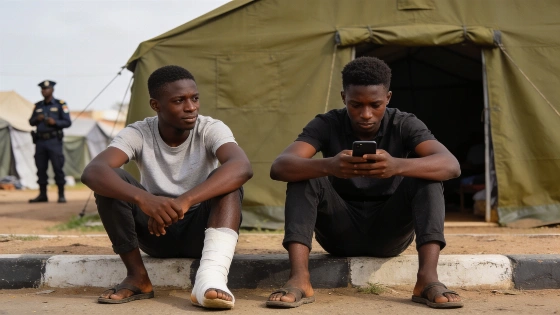
Ceuta is experiencing a new wave of migration pressure after around 80,000 people crossed into the city at the end of July. Emergency camps, such as the one at Loma Margarita, have become the center of efforts to house and process thousands of migrants, most of them young men from the Sahel region. The authorities have set up large olive-green tents on military land to accommodate up to 1,100 people, providing basic shelter and meals after months of hardship for many arrivals.
Inside these camps, the daily reality is shaped by the traumas and dangers left behind. Many of the young men managed to escape armed conflict in Mali, fled jihadist groups in Niger, or left Burkina Faso after armed gangs destroyed crops to starve local populations. Others, like Abdallah from Sudan, say returning home would mean being forced into armed groups. For some, the journey has left visible scars, such as untreated wounds, while others cling to the hope of reuniting with relatives already in Spain.
The Spanish government, facing logistical and legal challenges, has begun a triage process to determine who qualifies for asylum. According to Accem, the NGO managing the situation for the Ministry, police have started interviews to distinguish between those eligible for protection and others. The first stage of triage separated women and girls for safety, placed sub-Saharan migrants in dedicated facilities, and assigned Moroccans to separate locations. However, not all fit neatly into these categories, with some Algerian couples choosing to sleep on the beach rather than in the camps.
Most residents of Loma Margarita are men aged 18 to 35, many of whom had been waiting in northern Morocco for a chance to cross into Spain. The camp allows free movement, but access is restricted during meal times to maintain order. On the city’s beaches, others like Mohamed Camara from Guinea-Conakry wait for food distribution, recounting how friends were forced into labor in gold mines back home. Police have now begun registering names to start asylum procedures for these individuals.
The Sahel, a semi-arid belt stretching from the Atlantic to the Red Sea, includes countries such as Senegal, Mauritania, Mali, Burkina Faso, Niger, Chad, and Sudan. The region is home to 400 million people and has become a major source of asylum requests in Spain. Last year, Spain approved over 75,000 international protection and humanitarian status cases, with applications from the Sahel leading the list and nearly all being recognized. The government initially promised to return all irregular entrants, but the legal obligation to process asylum claims and handle unaccompanied minors has made this impossible in practice.
Along the road to the Centro de Estancia Temporal de Inmigrantes (CETI), young men from Mali and other countries spend their days waiting, some supporting each other through the uncertainty. For some, like Omar and Ahmed, the threat of violence and persecution at home is compounded by their personal circumstances, making return unthinkable. The situation in Ceuta remains tense, with the city adapting to the ongoing presence of migrants and the slow pace of administrative procedures. As highlighted in recent reports on Ceuta's migration crisis, the influx continues to reshape daily life for both residents and newcomers.
Spain’s approach to migration from the Sahel reflects broader European challenges. The CETI system is designed for temporary stays, but prolonged processing times and the scale of arrivals have strained resources. The legal framework requires authorities to assess each asylum claim individually, often leading to months of waiting. For many migrants, the hope of legal status and safety in Spain is balanced against the uncertainty of the process and the realities of life in temporary camps. The experience in Ceuta underscores the complexity of managing migration flows at Europe’s southern border, where humanitarian needs and administrative demands intersect daily.