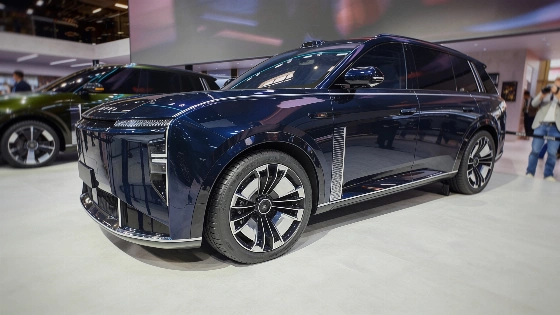
The Changan Nevo A06, developed with CATL, introduces a 45 kWh sodium-ion battery designed to maintain performance in severe cold. With over 400 km of range and fast charging, its launch is set for mid-2026 in China.
Changan has introduced the Nevo A06, a new electric sedan developed in partnership with CATL, that aims to set a benchmark for cold-weather performance in the EV market. Scheduled for release in China by mid-2026, the Nevo A06 stands out for its use of a 45 kWh sodium-ion battery—an alternative to traditional lithium-based cells—engineered to deliver reliable range and safety even in extreme temperatures.
The heart of the Nevo A06 is the CATL Naxtra battery, which marks one of the first mass-production applications of sodium-ion technology in a mainstream electric car. Sodium, being more abundant and less costly than lithium, offers a strategic advantage for manufacturers and consumers alike. According to Changan and CATL, the Naxtra battery achieves an energy density of up to 175 Wh/kg, comparable to many current LFP batteries, and is rated for over 10,000 charge cycles in certain uses.
Performance in Harsh Conditions
What sets the Nevo A06 apart is its resilience in severe cold. CATL claims the Naxtra battery can operate between -40°C and 70°C, retaining more than 90% of its usable capacity at -40°C. At -30°C, it reportedly delivers nearly three times the discharge power of a comparable LFP battery. This makes the Nevo A06 particularly attractive for drivers in regions where winter temperatures routinely plunge far below freezing.
Safety has also been a focus in the battery's development. CATL reports that the Naxtra cells have passed rigorous crush, puncture, and cut tests without emitting smoke or fire—an important consideration as battery stability remains a top concern for electric vehicle buyers.
Range and Charging
The Nevo A06 is designed for efficiency, offering a claimed range of over 400 kilometers on a single charge, based on the Chinese CLTC cycle. While real-world range may vary under stricter European WLTP or US EPA standards, the figure positions the sedan competitively among mid-sized electric vehicles. The battery supports rapid charging, reaching 80% capacity from empty in about 15 minutes under optimal conditions—a feature that could significantly reduce downtime for daily commuters and intercity travelers.
With its 45 kWh battery pack, the Nevo A06 targets users who prioritize practicality and cost-effectiveness over maximum range, making it suitable for both urban and regional journeys without the need for oversized battery modules.
Industry Context
While sodium-ion batteries have previously appeared in smaller urban EVs in China, such as the JAC Yiwei, the Nevo A06 is among the first to bring this chemistry to a larger, longer-range sedan with the industrial backing of CATL. The move signals a potential shift in the electric vehicle landscape, as manufacturers seek alternatives to lithium amid concerns over supply chain volatility and raw material costs.
CATL emphasizes that sodium-ion technology is not intended to replace lithium batteries entirely, but rather to complement them—offering new options for affordable, thermally stable, and resource-efficient electric vehicles. As the Nevo A06 prepares for its market debut, its performance in real-world conditions will be closely watched by both industry observers and consumers looking for reliable EV solutions in challenging climates.
For context, sodium-ion batteries are gaining attention globally as a promising alternative for entry-level electric cars and applications where cost and cold-weather reliability are critical. Their adoption in mainstream models like the Nevo A06 could accelerate broader acceptance and innovation in the sector.