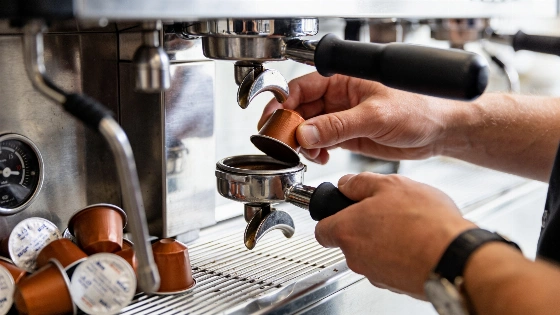
From August, single-use coffee capsules in Spain will be officially treated as packaging under new EU rules. The change brings new obligations for manufacturers and importers, but does not require cafés or restaurants to charge extra per capsule. Here’s what the new classification means for businesses and consumers.
Starting August 12, single-use coffee capsules—whether rigid or permeable—will be legally recognized as packaging in Spain, following the direct application of Regulation (EU) 2025/40. This shift marks a significant change for producers and importers, who will now face expanded requirements for registration, reporting, and waste management. The new classification aims to clarify responsibilities and improve the collection and recycling of these widely used products.
The regulation resolves longstanding ambiguity by explicitly including both permeable pods and rigid capsules used in coffee machines within the EU’s definition of packaging, provided they are discarded together with the coffee grounds. This replaces the previous Spanish standard, which only considered empty capsules as packaging and excluded those disposed of with used coffee. From August, the European definition will override national criteria, aligning Spain with broader EU waste management policies.
For businesses in the hospitality sector, the regulation does not introduce a mandatory surcharge per capsule. While Article 51 of the regulation allows member states to create economic incentives to encourage reusable packaging, it does not require Spain to impose a fee on each coffee pod served in cafés or restaurants. Any such charge would need to be established by national law, and current Spanish waste legislation does not specify a supplement for coffee capsules. The existing rules only mandate charges for certain plastic cups and food containers, not for coffee pods.
The main impact falls on producers, importers, and distributors who introduce these capsules to the Spanish market. They must now register, report annual sales volumes, and take on extended producer responsibility for the collection and recycling of used capsules. The Ministry for the Ecological Transition has already announced updates to the registration process and reporting requirements, with specific rules for declaring products before and after the regulation takes effect. Systems funded by producers must ensure that consumers can return used capsules at no extra cost, and that adequate recycling infrastructure is in place.
It is important to note that the new classification does not automatically require consumers to dispose of capsules in the yellow recycling bin. Instead, producers and local authorities are responsible for informing users about proper disposal methods, which may vary by municipality or manufacturer instructions.
Looking ahead, further changes are scheduled. By February 2028, permeable pods and capsules that soften after use must be industrially compostable, including those made mainly from paper. Rigid non-metallic capsules will only face this requirement if Spain introduces it and provides suitable collection and processing facilities. Meanwhile, restrictions on single-use plastic portions for sauces, milk, sugar, and condiments in hospitality will begin in 2030, but these do not apply to coffee capsules used in machines.
This regulatory update comes as Spain continues to adapt to evolving EU environmental standards. The country has previously faced delays in implementing other EU directives, such as the right to repair law for electronics, as highlighted in recent coverage of Spain's missed deadline for repair legislation. The new coffee capsule rules reflect ongoing efforts to clarify producer obligations and improve waste management across the EU.