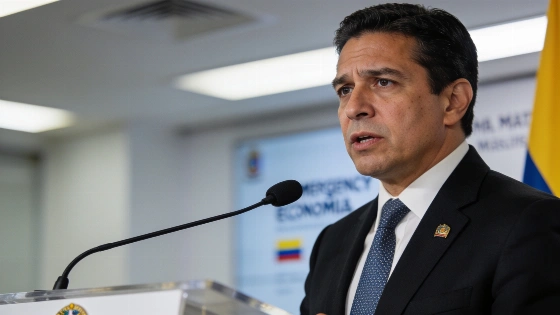
Colombia’s president has declared an economic emergency after a 7.4-magnitude earthquake. The move allows rapid financial and legal measures. Over 25,000 families are affected, with hundreds dead or missing.
Colombia’s government has declared an economic emergency in response to the catastrophic 7.4-magnitude earthquake that struck the country’s west, leaving a trail of destruction and forcing urgent action from authorities. President Abelardo de la Espriella, who took office just days before the disaster, announced the exceptional measure in his first press conference since assuming power. The decision enables the executive to issue decrees with the force of law, adjust taxes, and create new institutions to accelerate recovery efforts in the hardest-hit regions.
According to the latest official figures, the earthquake has resulted in 265 confirmed deaths, 496 people missing, 3,494 injured, and more than 25,800 families affected. The president outlined a series of immediate steps, including the creation of the Fondo Milagro, a dedicated fund to channel both national and international aid. He also promised targeted financial support for the most vulnerable, such as covering utility bills for affected families, providing rent subsidies, tax and financial relief, and backing for local businesses struggling in the aftermath.
De la Espriella emphasized that the country’s fiscal situation remains strained, but insisted that resources will be directed to the areas most in need. The emergency declaration, which follows an earlier disaster status announced on Monday, grants the government broader powers to act swiftly on tax and bureaucratic matters. This approach mirrors the response to the 1999 earthquake in the same region, when then-president Andrés Pastrana established a similar legal framework and created the FOREC fund, which played a crucial role in rebuilding over 136,000 homes and relocating thousands of families.
Political figures from both the ruling party and the opposition have supported the move, citing the scale of the tragedy as sufficient grounds for the emergency. The declaration must still be reviewed by the Constitutional Court, which earlier this year overturned a similar measure by former president Gustavo Petro under different circumstances. In this case, the government argues that the unprecedented scale of the disaster justifies the exceptional powers, with the president pledging to act strictly within constitutional and legal boundaries.
For context, the recent earthquake follows a pattern of seismic risk in western Colombia. Earlier this week, a powerful tremor was felt in major cities like Bogotá and Medellín, prompting emergency evacuations and raising concerns about the country’s preparedness for such events. The current emergency measures are designed to address both immediate humanitarian needs and the longer-term challenge of reconstruction.
Colombia’s legal framework allows the president to declare a state of economic emergency in cases of grave public calamity, enabling rapid intervention when normal legislative processes would be too slow. The effectiveness of such measures depends on swift implementation and oversight, especially given the scale of the current crisis. The coming weeks will test the government’s ability to coordinate aid, manage resources, and restore stability to the affected regions.