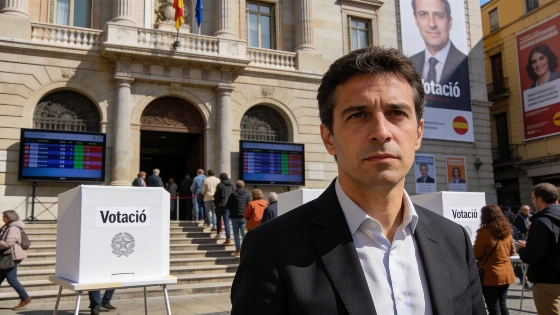
David Bondia received the highest number of public votes to remain Síndic de Barcelona. The final decision now rests with the city council. The process highlights growing civic engagement in Barcelona’s institutions.
David Bondia, the current Síndic de Barcelona, has emerged as the frontrunner in the city’s ombudsman selection after topping the public vote. Bondia, who has held the post since 2021 and is recognized for his expertise in civic and human rights, received 2,064 individual votes and support from 25 organizations. His rival, jurist Gemma Calvet, garnered 643 individual votes and six endorsements from entities. The city council confirmed these results as the participatory phase of the selection process concluded at the end of June.
The final appointment, however, is not determined by the public vote alone. The ultimate decision will be made by Barcelona’s municipal plenary session on July 31, where a two-thirds majority is required to confirm the next Síndic for a five-year term. The public voting, conducted both online via decidim.barcelona and at physical polling points across all ten districts, was open to residents over 16 and registered organizations. While this phase is non-binding, the council has stated it will take the results into account before making its choice.
Bondia’s tenure has been marked by a focus on mediation in high-profile city disputes, such as the attempted eviction at Casa Orsola, which became a symbol of Barcelona’s housing struggles. His annual reports have highlighted concerns over homelessness, strained social services, and the lack of emergency accommodation for families facing eviction. He has also pointed to bureaucratic delays affecting residents seeking to register on the municipal census.
Beyond his local role, Bondia serves as president of the Alianza Global del Ombudsperson Local (AGOL), a global network of local ombuds institutions. He previously led the Institut de Drets Humans de Catalunya (IDHC) and the working group for the Catalan Mechanism for the Prevention of Torture (MCPT). His international experience includes missions with the European Union, AECID, the Council of Europe, and the United Nations Development Programme. Academically, Bondia is a tenured professor of Public International Law and International Relations at the University of Barcelona.
The contest between Bondia and Calvet was marked by sharp exchanges during debates organized by the city council and Beteve. Calvet, a jurist with three decades of experience in rights advocacy, social policy, and public sector governance, has held roles with the European Commission, United Nations, and OECD. She has also served as director of the Transparency Agency in the Barcelona Metropolitan Area, as a member of the Catalan Parliament, and as president of its Justice and Human Rights Commission. Calvet contributed to drafting Barcelona’s Charter of Rights and Duties in 2010 and has coordinated good governance programs linked to the UN. She currently works as a lawyer and consultant, and has taught at the Autonomous University of Barcelona, University of Barcelona, and ESADE.
The participatory process for selecting the Síndic was first introduced in 2016 under former mayor Ada Colau. This year marks the third time the city has used this approach, aiming to bring the office closer to residents and amplify civic input in the final decision. After the public phase, municipal technical teams will prepare a report on the process for council groups to review ahead of the plenary vote.
Recent developments in Barcelona’s political landscape, such as the appointment of Meritxell Batet to lead Fundación Avanza, reflect a broader trend of institutional renewal and heightened public scrutiny of leadership roles. For more on these shifts in local governance, see the coverage of Batet’s new position at PSOE’s Fundación Avanza.
The outcome of the Síndic selection will signal how much weight the city council gives to public participation in key appointments. The process also underscores the evolving relationship between Barcelona’s institutions and its residents, as civic engagement becomes an increasingly central feature of local governance. The final decision at the end of July will determine who leads the city’s ombuds office through 2031.