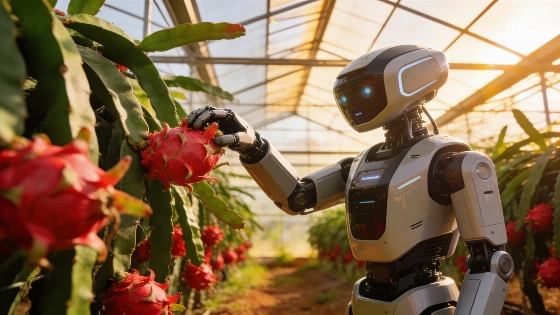
Dragonbot, an autonomous robot developed in Valencia, can identify and harvest only pitayas at peak ripeness, leaving unripe fruit untouched. Its precision promises to reduce waste and improve fruit quality for growers, marking a new step in smart farming.
Dragonbot, a new autonomous robot engineered at the Universitat Politècnica de València, is changing the way Spanish farmers harvest pitayas. In recent field trials, the robot successfully picked over 75% of ripe fruits, all without direct human intervention—a result that could reshape the economics of high-value fruit cultivation.
Unlike traditional harvesting, which often removes both ripe and unripe fruit, Dragonbot uses a combination of artificial vision, advanced algorithms, and a specially designed robotic arm to select only those pitayas that have reached optimal maturity. The system analyzes the external appearance of each fruit, estimating ripeness based on data collected from more than 500 samples across three growing seasons and varieties. Variables such as weight, firmness, and sugar content are factored in, allowing the robot to make precise decisions before initiating the harvest.
Precision Harvesting
The project, coordinated by the Agricultural Robotics Laboratory at the UPV, brought together expertise from the Instituto Universitario de Automática e Informática Industrial (ai2) and companies including GreenVision, Inderen, and Nutai. GreenVision contributed to the ripeness estimation technology, Inderen provided an agrivoltaic testing environment, and Nutai developed the vision system that pinpoints the exact cutting location on each fruit.
Dragonbot moves autonomously on a four-wheel-drive platform with independent suspension and two-wheel steering. Mounted on this base is a robotic arm equipped with a custom-designed gripper, tailored to the delicate structure of pitayas. The arm uses a vibrating blade and pneumatic scissors to detach the fruit, while flexible pneumatic fingers gently hold and place each pitaya into a tray, minimizing the risk of bruising or damage.
Reducing Waste, Improving Quality
By harvesting only fruit that meets commercial standards, Dragonbot enables a staggered picking process. This approach not only reduces the removal of immature fruit but also helps farmers deliver a more uniform product and cut down on losses during storage. According to Coral Ortiz, the project coordinator, less than 12% of the fruit handled by the robot suffered any damage during trials—a promising figure for a crop known for its fragility.
The technology could also address labor shortages that increasingly affect seasonal harvests in Spain and across Europe. With its adaptable design, Dragonbot may soon be used for other delicate fruits, expanding its impact beyond pitayas.
Funding and Future Prospects
Dragonbot was funded by the Generalitat Valenciana's Strategic Cooperation Projects program and European FEDER funds. The project was also recognized as a success story at Innova Connect, an event focused on collaborative innovation in the Valencian Community.
As agricultural automation advances, solutions like Dragonbot highlight the potential for robotics to improve efficiency, reduce waste, and support growers facing both economic and labor challenges. While the technology is still being refined, its early results suggest a future where precision harvesting becomes the norm for Spain's most valuable crops.