Holidaymakers transporting bicycles by car this summer risk €200 fines if they fail to display the mandatory V20 warning panel. Authorities have stepped up roadside inspections to enforce safety and visibility regulations for rear-mounted bike racks.
Spanish drivers heading out for summer holidays with bicycles strapped to their cars are under closer scrutiny than ever. The Dirección General de Tráfico (DGT) and Guardia Civil have intensified roadside checks, targeting one of the most common oversights: failing to properly display the V20 warning panel on rear-mounted bike racks. This simple mistake can now cost motorists up to €200 per violation.
The V20 panel, marked by red and white diagonal stripes and reflective material, is required by law whenever a load extends beyond the rear bumper of a passenger vehicle. According to the Reglamento General de Circulación, any indivisible cargo—such as bicycles or tow-ball racks—may only protrude up to 15% of the car’s total length. If the load extends past the rear outline, the V20 sign must be clearly visible at the back of the vehicle.
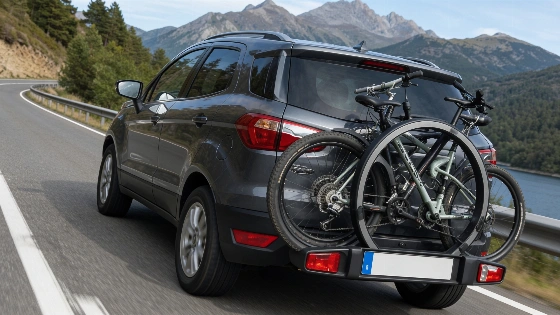
For most setups where the bikes do not exceed the car’s width, a single V20 panel, mounted perpendicular to the vehicle’s axis at the outermost point of the load, is sufficient. However, if the rack or wheels span the full width of the car (without exceeding the mirrors), regulations demand two V20 panels, each placed vertically at the outer edges in an inverted ‘V’ formation. Many drivers mistakenly believe that simply attaching the V20 sign is enough, but authorities stress that the rack must never obscure the car’s lights or license plate.
If the bike rack or bicycles block any lights or the registration plate, drivers are legally required to fit an auxiliary support with a duplicate license plate and fully functional repeat lighting, connected to the car’s electrical system. Failing to comply with these visibility rules is also considered a serious offense, carrying the same €200 penalty.
Beyond signage, police are also checking the weight and security of bike racks and their loads. All equipment must be firmly secured with approved straps or fastenings to prevent movement or accidental loss. If a poorly attached rack or bicycle falls onto the road, the resulting danger can push fines up to €500.
Transporting bicycles inside the car is not exempt from rules either. While it is legal to carry a bike in the boot with the seats folded down, it must be anchored to the vehicle’s tie-down points using certified restraints. The load must not restrict the driver’s movement or block rear visibility through the window or mirrors.
With the summer exodus underway, the DGT urges drivers to double-check their bike transport systems before setting off. Ensuring the rack is secure, lights are visible, and the V20 panel is correctly installed is essential—not just to avoid fines, but to guarantee safety for everyone on the road. For those interested in broader trends in vehicle safety and technology, recent developments such as the introduction of advanced certified trucks in Europe highlight the ongoing push for higher standards across all types of road transport.
Key facts to remember: the V20 panel is mandatory for any rear load that extends beyond the bumper; two panels are needed if the load matches the car’s width; and all lights and plates must remain visible. These rules are strictly enforced during the summer travel season, reflecting Spain’s commitment to road safety amid heavy holiday traffic.