El Hormiguero reached its highest audience since March with the president of Ceuta as guest. El Intermedio also saw a ratings boost during Pedro Sánchez’s appearance. Political interviews fueled a sharp ratings battle across Spanish TV.
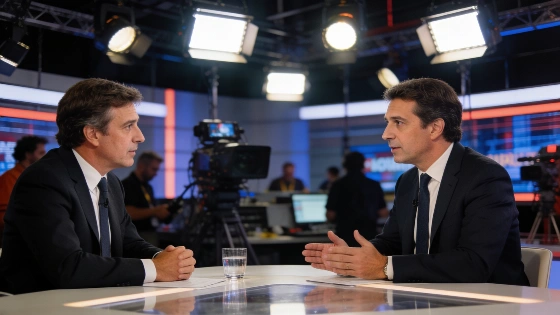
Antena 3’s El Hormiguero topped the night, attracting 1,940,000 viewers and a 16.7% share as Juan Jesús Vivas, president of Ceuta, joined Pablo Motos in the studio. The show peaked at 2,383,410 viewers and a 19.5% share at 22:29, its best numbers since Santiago Segura’s visit in March.
Political interviews set the pace across Spanish television. On laSexta, El Intermedio used Pedro Sánchez’s appearance to post one of its strongest results this year. The satirical program, which had struggled to reach a 6% share earlier in the season, jumped to 9.3% and 1,103,000 viewers. The segment with Sánchez (21:51 to 22:24) climbed to a 12% share and 1,469,000 viewers, making it laSexta’s most-watched broadcast since Jordi Évole interviewed Gabriel Rufián in March 2025.
The evening was deliberately structured as a direct clash between two major political interviews: El Hormiguero announced the visit of Ceuta's president Juan Jesús Vivas, while El Intermedio scheduled an interview with Pedro Sánchez, as confirmed by advance programming and TV listings.
El Hormiguero’s lead in the access prime slot was clear. The interview with Vivas alone pushed the show to a 17% share and 2,094,000 viewers between 22:00 and 22:38. Other programs—La Revuelta (10.3% and 1,219,000), First Dates (8.6% and 1,005,000), Horizonte (9.2% and 1,076,000), and En el punto de mira (10.8% and 807,000)—lagged behind, unable to match the draw of the night’s headline interviews.
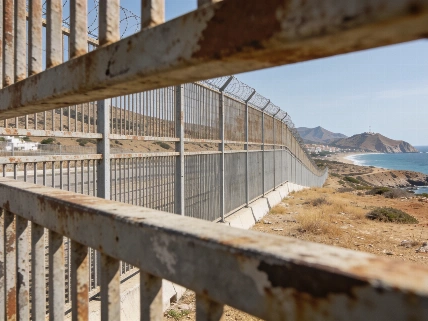
According to independent media reports, Vivas used his appearance to sharply criticize the Spanish government’s handling of the migration crisis in Ceuta, directly accusing Pedro Sánchez and the Ministry of the Interior of failing to respond adequately to the influx of migrants and controversial policies toward Morocco. These remarks, widely cited after the broadcast, intensified the political debate and drew public attention to the issue.
Morning shows also posted strong numbers. La hora de La 1 with Óscar López reached a 22.1% share and 427,000 viewers, while Mañaneros 360 with Óscar Puente had 17.9% and 561,000. In news, Antena 3 Noticias 1 with Sandra Golpe led the day with a 24.5% share and 2,221,000 viewers, confirming the channel’s lead in daily news.
Media previews emphasized that the main focus of both broadcasts was the migration pressure on Ceuta and the public reactions of authorities. In the days leading up to the broadcast, Pedro Sánchez publicly stated the need to prepare for a 'structural reality' regarding migration, which heightened the political significance of his appearance on El Intermedio.
Across the networks, Antena 3 led with a 15% daily share, followed by La 1 at 12.3%, FORTA at 8.7%, Telecinco at 8.3%, Cuatro at 7.7%, laSexta at 5.8%, and La 2 at 3.8%. Top shows by channel included La ruleta de la suerte (22.3% on Antena 3), La hora de La 1 (20.9% on La 1), La isla de las tentaciones (12.3% on Telecinco), En boca de todos (11.8% on Cuatro), El Intermedio (9.3% on laSexta), and Malas lenguas (7.2% on La 2).
Pedro Sánchez’s media strategy has kept him in the spotlight, as seen in recent coverage of his appearances on El Intermedio. The latest numbers show that high-profile political guests continue to attract Spanish audiences, especially when combined with formats that mix entertainment and current affairs.
The data points to a clear trend: Spanish viewers are tuning in for political content when it is delivered with personality and immediacy. Antena 3’s success with political interviews, and laSexta’s use of satire and access to top officials, show how prime time is shifting. When politics takes center stage, the audience follows—and the networks willing to take that risk are seeing the results.