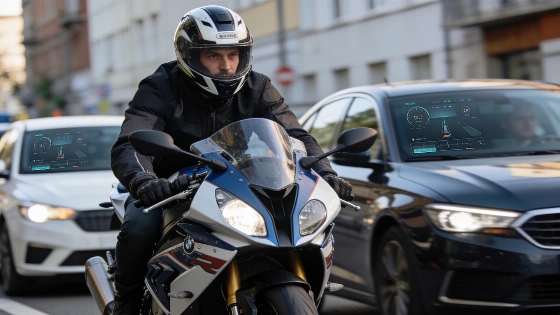
The European Union is weighing whether to require motorcycles to automatically limit acceleration, a move that could reshape road safety rules. While cars and trucks already use ISA technology, motorcycles remain exempt, and no official timeline has been set for new regulations.
As of July 2024, all new cars, vans, trucks, and buses sold in the European Union must be equipped with Intelligent Speed Assistance (ISA) systems. These devices use cameras and digital maps to detect speed limits and warn drivers when they exceed them. However, motorcycles remain outside the scope of this regulation, and the question of whether to include them is now back on the table in Brussels.
The European Commission is reportedly exploring the possibility of requiring motorcycles to automatically reduce power when speed limits are exceeded. According to a recent article published on August 11, there is no formal legislative proposal yet, and any change would not be immediate. The current ISA rules apply only to vehicles in categories M and N, which cover passenger cars and commercial vehicles. Motorcycles, classified as category L, are regulated separately under EU Regulation 168/2013, and any extension would require new technical standards tailored to two-wheelers.
How ISA Works Today
ISA systems, now standard in many vehicles, combine real-time data from road signs, GPS, and digital maps to monitor speed. When a driver exceeds the posted limit, the system can issue visual or audible warnings and, depending on the configuration, intervene in the vehicle's propulsion. Importantly, EU law requires that drivers must always be able to override the system and even switch it off, though it reactivates when the vehicle is restarted. This means ISA does not enforce a hard speed cap, but rather acts as a persistent reminder and gentle deterrent.
Why Motorcycles Are Different
Applying ISA to motorcycles presents unique challenges. Unlike cars, motorcycles often rely on acceleration as a safety maneuver, such as avoiding a vehicle drifting into their lane. Automatic power reduction could interfere with these evasive actions, raising concerns among riders and safety experts. Any future regulation would need to address these scenarios and ensure that safety is not compromised by overly restrictive controls.
Technically, many modern motorcycles already use ride-by-wire electronic throttles, allowing onboard computers to modulate power delivery. Traction control, riding modes, and cruise control systems are common features. However, integrating ISA would require highly reliable detection of speed limits, which can be complicated by temporary signs, poor weather, or faulty road markings. Mistaken interventions could have serious consequences for riders, making accuracy and clear override options essential.
Rising Motorcycle Fatalities
The push to revisit ISA for motorcycles is driven in part by troubling statistics. According to the EU's 2026 road safety report, motorcyclists accounted for 18% of all road deaths in 2024, with 3,684 fatalities recorded. This marks a 7% increase compared to 2014 and a 3% rise since 2019. These figures highlight the persistent risks faced by riders and the ongoing search for effective safety measures.
For now, there is no official date for when, or if, ISA requirements will be extended to motorcycles. Any future mandate would need to balance the potential for accident reduction with the realities of motorcycle dynamics and rider control. As the debate continues, the European Commission is expected to consult with industry experts, safety advocates, and rider groups before drafting any new rules.
As noted by Talent24h, the discussion reflects broader efforts to modernize road safety across Europe, but also underscores the complexity of regulating diverse vehicle types. For motorcyclists, the outcome could mean significant changes in how they interact with their machines—and the road.