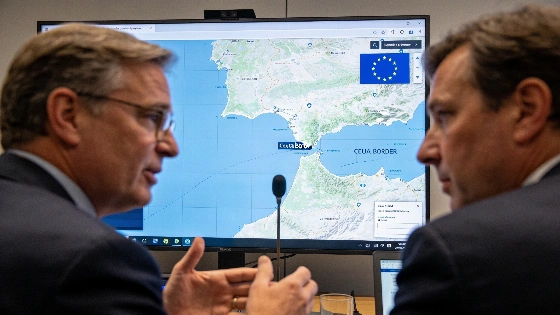
Brussels has set up a direct channel with TikTok and Meta to counter disinformation linked to the Ceuta border crisis. The move follows a record influx at the Spanish-Moroccan border and growing concerns over online rumors.
The European Commission has activated a special coordination mechanism with TikTok and Meta to curb the spread of false information related to the recent crisis at the Ceuta border. This decision comes after a surge of over 70,000 irregular crossings between Morocco and the Spanish enclave at the end of July, an event that drew attention to the role of social media in fueling rumors and organizing mass movements.
Vice President of the Commission, Henna Virkkunen, called on major tech companies to enforce crisis protocols and act decisively in situations where misinformation could escalate tensions. She emphasized that the EU will closely monitor digital platforms in cooperation with its agencies to disrupt criminal networks exploiting vulnerable populations with misleading promises.
Meta, which owns Facebook, Instagram, and WhatsApp, and Bytedance, the parent company of TikTok, have both agreed to participate in this EU-led initiative. Their involvement is based on the European Commission’s voluntary code of conduct for digital platforms, which also includes Microsoft, Alphabet, and Twitch. Notably, X, owned by Elon Musk, has not joined the code. The code allows for the rapid activation of crisis response mechanisms, including daily contact and direct escalation channels between platforms, fact-checkers, and EU authorities.
Following the July border incident, investigations revealed that calls for further mass crossings were circulating online, with some posts specifically targeting a new attempt on August 15. In response, the Commission convened a meeting last week with Meta, TikTok, and several fact-checking organizations that are also signatories to the code. According to an EU spokesperson, both platforms confirmed they had triggered their crisis protocols, and a dedicated escalation and cooperation mechanism is now in place, with daily updates and ongoing contact with national law enforcement agencies.
The platforms have committed to banning content related to smuggling and to working closely with local fact-checkers who understand the regional context and can help optimize platform responses. The Commission considers this approach effective for now but has indicated readiness to take further steps if necessary. The importance of full implementation of the Digital Services Act (DSA) in Spain was also highlighted, as the Spanish government has yet to designate the authority responsible for enforcing the EU regulation.
Henna Virkkunen has also discussed the Ceuta situation with Spain’s Minister of Digital Transformation, Óscar López, underlining the urgency of national compliance with the DSA. The ongoing coordination reflects broader European concerns about the impact of online disinformation on migration flows and border security. This issue has already sparked political tensions in Spain, as seen in recent disputes between government ministers and the Senate over the handling of the Ceuta crisis, detailed in this related report.
For context, the Digital Services Act is a landmark EU regulation aimed at increasing accountability for online platforms, particularly regarding illegal content and crisis response. Its full implementation is seen as crucial for managing cross-border challenges like those witnessed in Ceuta, where digital misinformation can have immediate real-world consequences for migration, security, and public order.