Working in Construction in Spain Through the Eyes of a Bolivian Master. Bolivian worker Albino shares his real experience working on construction sites in Spain. He compares working conditions, salaries, and physical demands to those in his homeland, discusses the challenges of adaptation, and explains why foreigners stay in the profession.
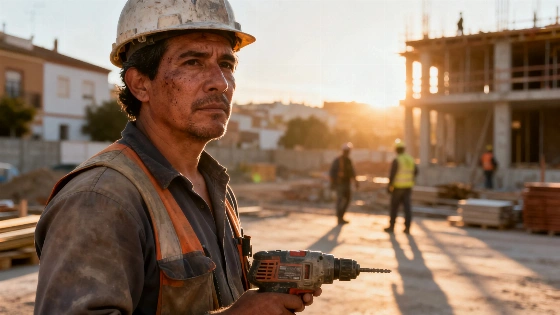
Spain's construction industry has long relied on migrant labor from Latin America, and the story of Albino, a 42-year-old Bolivian, vividly illustrates the challenges faced by foreign specialists. He has worked in construction for almost twenty years, six of them in Spain. His journey is not just a search for stability and better pay, but also a constant process of adapting to the new demands of the profession.
In Spain, the salary of a skilled construction worker is significantly higher than in Bolivia. According to Albino, one can expect to earn €1,300–1,400 a month here, whereas a similar job at home brings in about €400. The difference is considerable, but as Albino himself points out, you pay for it with your health: the physical demands on a construction site are immense, and not everyone can stand this pace for years.
Salary and reality
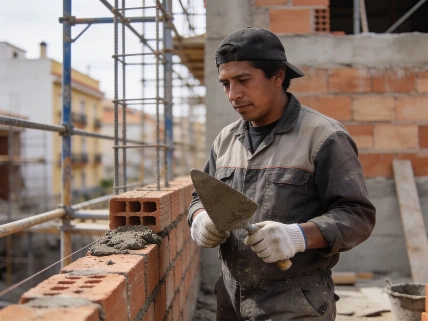
Many believe that working in construction in Spain is a quick way to make money. However, Albino emphasizes that despite the higher pay, the job here requires not only endurance but also constant professional development. Unlike in Bolivia, where materials and technologies are limited, in Spain you have to master a wide range of types of plaster, cement, and other construction mixes. This takes time and a willingness to learn, especially if your experience was gained in another country.
Salary comparisons between countries look impressive, but behind the numbers lies daily hard work. Albino admits: physical fatigue builds up, and health is the main resource that is lost faster than it seems. The question of whether the income difference is worth such effort remains open for anyone who chooses this path.
Materials and training
One of the main challenges for a migrant is the need to quickly master new materials and methods. In Bolivia, according to Albino, the options were limited: one type of plaster, standard cement. In Spain, however, the range is much wider—from fast-drying mixtures to specialized types of plaster and adhesives. Each project requires an individual approach, and mistakes can be costly.
Constant learning becomes part of the profession. Here, it's important not only to know how to lay bricks, but also to understand which material to choose for a specific task, and how it affects deadlines and the cost of work. For those who have come from another country, this means the need to adapt quickly and be ready for new demands.
Who works on construction sites
Another feature of Spain's construction sector is a noticeable lack of young professionals. Fewer and fewer locals choose this profession, considering it too difficult and unattractive. As a result, construction sites are increasingly staffed by migrants like Albino, who are willing to take on challenging tasks and are not afraid of physical labor.
Albino began his career at the age of 25, learning from relatives and gradually mastering all stages of construction work. Over the years, he learned to appreciate not only the process itself but also the result—seeing a house or a new building emerge from nothing. It is precisely this sense of completion and pride in the work accomplished that keeps him in the profession despite fatigue and wear.
The meaning of the profession
For Albino, it's not just about the money, but also about the opportunity to create something with his own hands. He notes that working with brick, plaster, and gypsum requires skill and patience. A finished project is not just the result of labor but a testament to professionalism and experience. Even though he gets tired, he does not regret his choice: for him, the construction profession is a part of life that will remain meaningful regardless of circumstances.
The question of whether a high salary compensates for all the challenges remains relevant for many migrants. As Albino's experience shows, financial benefit is only one side of the coin. Physical strain, the need for continuous learning, and a lack of young personnel make the profession demanding, yet in demand. In this context, it is worth recalling that even a high income does not always guarantee financial independence—as mentioned in the article on dependence on salary, stability requires more than just a good paycheck.
Albino's story is an insider's look at the reality of Spanish construction, where experience, diligence, and a willingness to learn are the key ingredients for success. No matter how technologies and materials change, the profession of builder remains in demand, and its true meaning lies in the ability to create something new and see the results of your work.