Alberto Núñez Feijóo proposes giving extra seats to the winning party in Congress. He also raises concerns about the growing electoral roll linked to the 'ley de nietos'. The debate intensifies ahead of the 2027 general elections.
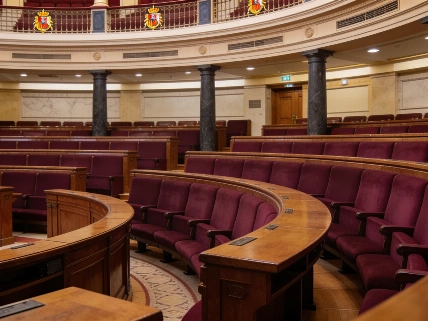
Alberto Núñez Feijóo, leader of the Partido Popular, has reignited debate over Spain’s electoral system by proposing a significant change: awarding additional seats in Congress to the party that wins the general election. This suggestion, inspired by models in Italy and Greece, aims to ensure greater political stability but would require a major overhaul of the current electoral law. Feijóo’s remarks come as the country looks ahead to the 2027 general elections, with most private polls currently projecting a simple majority for the PP, potentially in coalition with Vox.
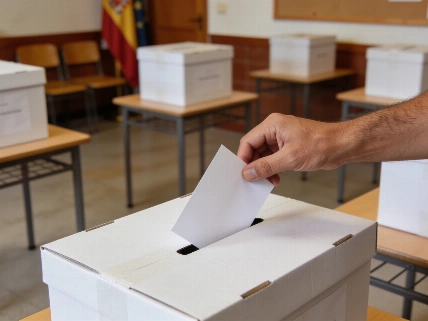
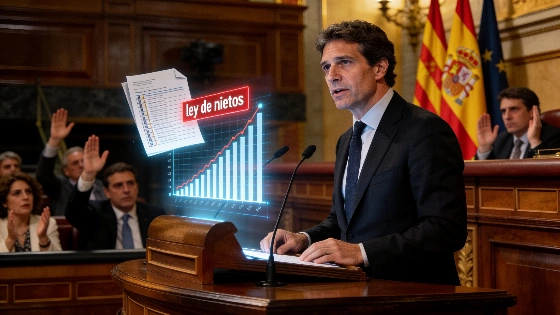
Feijóo’s proposal arrives amid heightened scrutiny of the recent expansion of the Spanish electoral roll. He has openly questioned the motives behind the so-called 'ley de nietos', a government initiative that allows descendants of Spanish exiles and emigrants to obtain Spanish nationality. According to Feijóo, this measure is less about historical justice and more about “electoral engineering” designed to attract new voters. He specifically pointed to Buenos Aires, suggesting that the influx of new citizens there could make it one of the most 'populated' Spanish cities in terms of eligible voters for the next election cycle.
The 'ley de nietos' stems from the 2007 Historical Memory Law, which was expanded in 2022 under the coalition government of PSOE and Sumar. This extension broadened eligibility for Spanish nationality among descendants of exiles, allowing them to register in the Censo de Españoles Residentes Ausentes (CERA) and participate in general elections. However, these new citizens are not eligible to vote in municipal elections, as they are not tied to a specific Spanish locality. By March 2026, over 2.45 million applications for nationality had been submitted under the new law, with more than 545,000 approvals and over 306,000 registrations completed in consular civil registries. The Consulate General in Mexico alone processed more than 117,000 requests, making it one of the busiest after Argentina.
Feijóo has acknowledged that any reform to the electoral law, specifically the Ley Orgánica del Régimen Electoral General (LOREG), would require broad parliamentary consensus and is unlikely to advance under the current government. He stated that only if the PP secures a majority in the next legislature could such changes be implemented. The Spanish Constitution mandates proportional representation in each constituency, but the specifics are governed by the LOREG, which has remained largely unchanged since its approval in 1985.
The debate over electoral reform and the expansion of the voter roll comes at a time when trust in democratic institutions is a recurring theme in Spanish politics. This issue was recently highlighted by King Felipe VI, who called for renewed confidence in democracy and consensus-building during a speech at the Club de Madrid. For more on the monarch’s perspective and the broader context of democratic trust in Spain, see the recent coverage on King Felipe VI’s call for renewed faith in democracy.
As the deadline for nationality applications under the 'ley de nietos' closed in October 2025, authorities adopted a flexible approach, accepting all appointment requests made before the cutoff, even if processing was delayed due to consular backlogs. This surge in applications has intensified the political debate over the law’s impact on future elections and the composition of the Spanish electorate. The outcome of these discussions could shape not only the rules of the next general election but also the broader landscape of Spanish democracy in the years ahead.