Alberto Núñez Feijóo says a PP government would protect the public pension system and raise payments in line with the CPI. He made the pledge during the campaign for Spain’s November 29 general election.
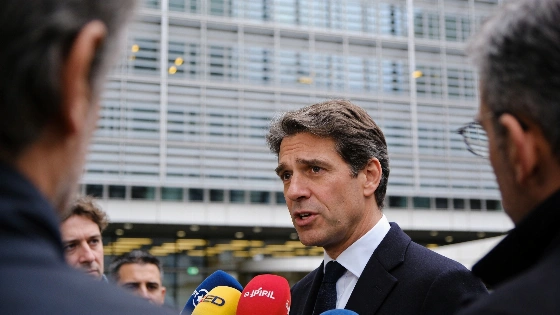
After the European People’s Party summit in Brussels on October 15, Alberto Núñez Feijóo challenged Pedro Sánchez over his 2010 vote in Congress to freeze pensions. The vote was part of anti-crisis measures under José Luis Rodríguez Zapatero’s government. Feijóo said a government led by him would guarantee the public system’s viability and link pension rises to the Índice de Precios al Consumo, Spain’s consumer price index. He called pensions non-negotiable. The pledge sets no fixed increase percentage, Agencia EFE reported.
The promise comes as parties prepare for the November 29 general election. PP deputy Juan Bravo also backed CPI-linked increases, while saying the system’s viability depends on the economy’s performance.
On the left, parties spent Thursday negotiating joint election lists. In the Canary Islands, Nueva Canarias-Bloque Canarista and Podemos Canarias agreed to run with Izquierda Unida Canaria and Movimiento Sumar Canarias. Their alliance will use the name Unidad del Pueblo Canario, or UPC. The Frente Amplio welcomed the pact and urged Podemos to pursue unity elsewhere.
Other talks remain up in the air. Podemos Galicia said it would seek an agreement with Esquerda Unida. In the Balearic Islands, Ara Més and Sumar reached a preliminary deal with Esquerra Unida; Podemos is not part of it for now. Ada Colau called for a single left-wing candidacy, while Irene Montero said Podemos would keep seeking agreements in more regions.
In Navarra, the PSN’s regional executive approved its lists, with Elma Saiz leading the Congress slate and Arróniz mayor Ángel Moleón heading the Senate list. In Asturias, PP deputy Cayetana Álvarez de Toledo criticised Adriana Lastra’s decision to lead the PSOE list. Negotiations over the Madrid list are part of a campaign also covered in an October polling report.
Electoral oversight brought another dispute. On October 15, the Junta Electoral Central, Spain’s central electoral authority, opened disciplinary proceedings against Sánchez over a press conference at the Moncloa on October 6. It took place the day after he called the election and followed a Cabinet meeting that discussed two housing decrees. The JEC is examining whether Sánchez’s remarks breached rules on institutional neutrality or the ban on using public resources for election campaigning. The appearance came before the formal election period.
The JEC ordered Moncloa to remove the video and the contested statements from its website and other official channels. The Partido Popular and Se Acabó La Fiesta filed complaints, alleging that Sánchez used the government press conference to promote his administration’s record. They also said he criticised the opposition and called for a broader parliamentary majority. The authority said the case concerns the use of institutional resources to make value judgments and promote claimed government achievements. It is also examining whether Sánchez used them to attack political rivals. He has ten working days to respond. The opening of proceedings is not a final ruling or a sanction.
Separately, Ismael Moreno, the National Court judge handling the Koldo case, asked Santiago Pedraz for copies of agendas seized from Santos Cerdán’s home and PSOE headquarters. The request forms part of an investigation into Cerdán’s income.
Housing and migration surfaced in other campaign exchanges. PSOE-A leader María Jesús Montero criticised the Andalusian government’s appeal to the Constitutional Court against two central-government housing decrees, which Congress had rejected. PP’s Borja Sémper said his party would change the legislation needed to establish what he called an orderly migration policy if it enters government.
Sánchez is scheduled to appear at Valladolid’s Cúpula del Milenio on October 19. Santiago Abascal is due to hold a rally in Ponferrada the following day, then visit Burgos on October 22. At the Council of Europe’s Venice Commission, the Committee for Democratic Elections said overseas voters registered under CERA should be assigned to constituencies using clear criteria. It said those criteria must also be verifiable and objective.