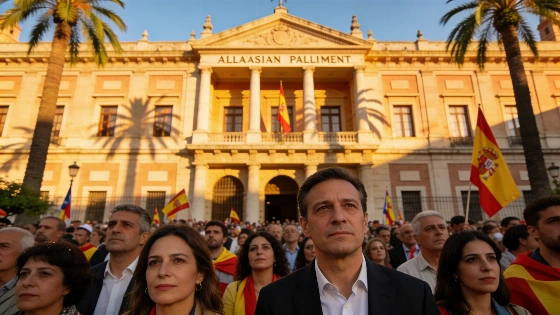
The PP is alarmed by the rapid increase in new Spanish citizens eligible to vote. Despite suspicions of irregularities, Feijóo rules out court action and focuses on winning over these voters.
The Partido Popular (PP) leadership has decided not to challenge Spain’s electoral system in court, despite mounting concerns over the mass nationalization of descendants of Spanish exiles. According to sources cited by Vozpópuli, the party is closely watching the process that could add up to 2.4 million new citizens to the electoral roll within five years, but will not pursue legal or parliamentary action for now.
This influx is largely attributed to the Law of Historical Memory, which allows grandchildren of Spaniards who fled to Latin America after the Civil War to obtain citizenship. The PP fears that insufficient verification of eligibility could impact future elections, especially as these new voters are distributed across all 52 provinces. However, the party’s current strategy is to appeal to these voters directly, rather than echoing the accusations of electoral manipulation frequently voiced by Isabel Díaz Ayuso against Pedro Sánchez.
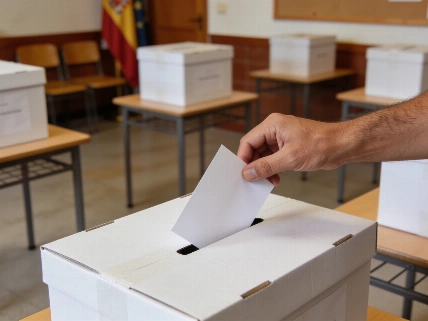
Party officials admit to monitoring the situation with suspicion, particularly after recent regional elections in Extremadura, Aragón, Castilla y León, and notably the May 17 vote in Andalucía. In these contests, the PSOE performed strongly among overseas voters, even where it lost heavily in domestic polling stations. The PP acknowledges that the left has historically held an advantage in the external vote, with Galicia as a rare exception. Yet, only in exceptional cases has this altered the final allocation of seats—such as in November 2019, when the PP gained a seat in Vizcaya from the PNV due to absentee ballots, complicating Sánchez’s investiture.
Looking ahead, the PP estimates that around 600,000 of the anticipated 2.4 million new voters could already participate if general elections were held today. Despite internal disagreements—some party members believe Sánchez will do anything to retain power—the leadership is opting for caution. Unlike Vox, which has called for legal challenges, the PP intends to focus on persuading these new citizens to support political change in Spain.
Official data from the Instituto Nacional de Estadística (INE) highlights the scale of the shift: Argentina alone now has over 509,000 Spaniards registered in the CERA (Census of Absent Residents), with significant numbers in France and the United States as well. As these new voters become eligible, their impact could be decisive in smaller provinces, where just a few thousand votes might overturn results. This concern has grown after a video circulated on social media showing PSOE leaders in Argentina discussing strategies to concentrate new voters in provinces where the PP’s lead could be most vulnerable.
The debate over the influence of overseas voters is not new, but the current wave of nationalizations has intensified scrutiny. The CERA vote has rarely been decisive in the past, largely due to low participation rates and the dispersal of ballots across provinces. However, the exponential growth in eligible voters under the Law of Historical Memory is changing the landscape. As the 2027 elections approach, the PP’s approach stands in contrast to the more confrontational tactics seen in other parties. This internal tension within Spain’s major parties echoes broader disputes over electoral strategy, as seen when the PSOE’s early primary race in Madrid sparked controversy among its own ranks—an episode detailed in coverage of the PSOE’s internal conflicts.
For context, Spain’s electoral system allocates seats by province, making small shifts in voter distribution potentially significant. The Law of Historical Memory, first enacted in 2007 and expanded in recent years, has enabled hundreds of thousands of Latin American descendants to claim Spanish citizenship. While the PP’s current stance is to avoid escalating the issue publicly, the party’s vigilance signals ongoing unease about the potential for these demographic changes to reshape Spain’s political map.