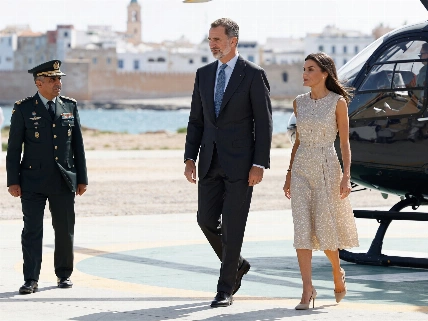
The King and Queen are due in Ceuta on Tuesday, after about 70,000 migrants entered from Morocco in late July. Their programme includes a school visit and a memorial for those who died.
The crossings took place on 30 and 31 July, nearly two and a half months before Felipe VI and Letizia’s scheduled visit. Reuters reported that more than 72,000 people entered the enclave; the Associated Press and ABC News put the number at about 80,000. Most returned to Morocco within days, but thousands, including minors, remained in Ceuta. The visit is intended to show the Crown’s support as the city works toward a return to normal life.
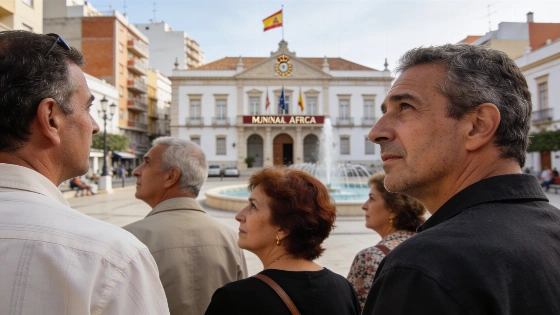
After midday, the royal couple are due to meet Ceuta president Juan Jesús Vivas and other authorities at city hall. They will then hold a working meeting with representatives of local society. People are also expected to gather in Plaza de África to greet them.
The pressure on Ceuta has eased. Police operations continue.
About 140 people died trying to reach the enclave in July, in one of the deadliest episodes on the Ceuta border. Some were buried at Sidi Embarek cemetery, while dozens of bodies remained unidentified. People crossed by swimming or by negotiating barriers at the breakwater separating Ceuta from Morocco.
Police cleared the informal settlements on Ceuta’s beaches on Sunday, completing an operation at El Guano after earlier clearances at Benítez and El Trampolín. Spain’s Interior Ministry said more than 350 officers from different units took part in the El Guano operation on 11 October. It was the fifth action to clear public spaces in recent weeks. Hundreds of people had settled there, hoping to reach mainland Spain or return to Morocco.
The government says nearly 12,000 people have returned to Morocco since 10 August. It considers normality restored, while acknowledging that migrants still sleep outdoors in some neighbourhoods and that police action there will continue. In September, Spanish authorities estimated that about 10,000 people remained in the city. Vivas put the figure as high as 15,000.
In the afternoon, Felipe VI and Letizia are scheduled to visit Vicente Aleixandre public school and its neighbourhood. The school teaches children from different faith communities. Getting classes back on track was one of the most sensitive issues after the mass entry. Uncertainty and protests over the crisis added to concerns about minors’ safety.
Some minors spent weeks in makeshift camps on beaches. Others stayed near warehouses or on hills while waiting for accommodation or transfer to mainland Spain. Some were awaiting return to Morocco. Migrants also reported alleged abuse by Spanish military personnel. Prosecutors opened inquiries into claims of mistreatment, including allegations involving minors.
Representatives of Ceuta’s four faith communities will attend an ecumenical event at Sidi Embarek cemetery to remember those who died on 30 and 31 July. The source puts the death toll at about 140. The day will end with a meeting between the royals and members of the public in the city centre.
The visit comes amid a long-running diplomatic dispute. The previous royal visit to Ceuta and Melilla took place in November 2007, when Juan Carlos I and Queen Sofía travelled to the autonomous cities for the first time in more than 70 years. Their trip triggered a diplomatic crisis with Morocco. Ceuta and Melilla are Spanish enclaves in North Africa. Morocco disputes Spanish sovereignty over them and considers them occupied territories.
On 9 October, King Mohammed VI said the existing model of migration cooperation with Spain had reached its limit. He criticised Spanish court rulings restricting the return of minors and some asylum seekers. He also rejected what he described as pressure or blackmail from Spain and criticised the use of the crisis for political purposes.
Felipe VI has spoken with Vivas several times since the crisis began. He has called for stronger protection of Ceuta and Melilla’s borders, part of the EU’s external frontier, and for European states to share responsibility for that protection. At state dinners in September and October, he argued that the July events posed security and public-order challenges. He also described a humanitarian challenge.
On 12 October, Spanish Prime Minister Pedro Sánchez said Moroccan naval vessels had entered Spanish territorial waters without permission. Spanish reports cited by Reuters said at least one frigate and several patrol vessels crossed into the area after the mass crossing. A Spanish frigate intercepted them and made them leave.
After spending the night in Ceuta, the King and Queen are scheduled to travel to Melilla on Wednesday for a similar programme.