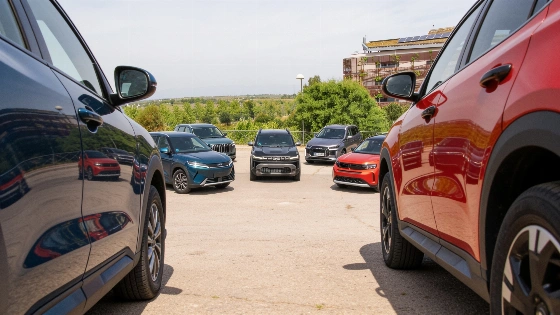
New car prices in Spain have soared, but a handful of SUVs still deliver strong value for around €20,000. Here’s a closer look at five models that combine modern tech, efficiency and practicality without breaking the bank.
Finding a new car for a reasonable price has become a challenge in Spain, as both sticker prices and running costs continue to climb. Yet, for drivers unwilling to compromise on space or technology, several SUVs now stand out for offering a compelling mix of features and affordability—each available for around €20,000.
While the cheapest cars on the market are often compact city models, these rarely suit families or those needing versatility. The current landscape, however, includes a new wave of SUVs that cater to a broader range of needs, from daily commuting to weekend trips, and even offer a choice of petrol, hybrid, or fully electric powertrains. Environmental labels have also become a decisive factor for buyers in urban areas, and these five models cover the spectrum from C to ECO and CERO badges.
BYD Atto 2 DM-i
The BYD Atto 2 DM-i stands out as a plug-in hybrid SUV that blends a 98 hp four-cylinder petrol engine with a 197 hp electric motor, delivering a combined 166 hp. Its 7.8 kWh LFP battery enables over 100 km of electric range in city driving and a total range close to 930 km. The Atto 2 offers a refined driving experience, with smooth transitions between electric and petrol modes and a suspension setup tailored to European preferences. Inside, the cabin feels modern and minimalistic, dominated by a responsive central touchscreen and soft-touch materials. Rear passengers benefit from generous space and elevated seating, making access easy and comfort a priority.
Dacia Duster ECO-G
The Dacia Duster ECO-G remains a benchmark for value in the SUV segment. Powered by a 1.2-litre three-cylinder engine producing 122 hp, it can run on both petrol and LPG, helping drivers avoid the worst of fuel price volatility. While the engine is not the quietest and requires higher revs for brisk acceleration, it delivers combined fuel consumption between 5 and 6 litres per 100 km. The Duster’s handling is stable, and its manual gearbox, though not the most precise, is adequate for everyday use. The interior prioritizes durability over luxury, with hard plastics but solid assembly. Practical touches like the YouClip accessory system add customization options, reinforcing the Duster’s reputation as a trustworthy, no-nonsense SUV.
Ebro s400
The Ebro s400, at 4.32 meters long, is the smallest SUV from the revived Spanish brand now backed by China’s Chery. It features a 211 hp hybrid system combining a 95 hp 1.5-litre petrol engine and a 204 hp electric motor. The electric component dominates most of the time, resulting in quiet, smooth driving—though performance drops noticeably when the battery is low. The s400 is comfortable and well-suited for small families, with a suspension and steering tuned for comfort, albeit with some body roll at higher speeds. The cabin is trimmed in synthetic leather and offers wireless smartphone connectivity, a central touchscreen, and a separate climate control panel. However, the boot is compromised by a protruding battery. Overall, the s400 is a straightforward hybrid SUV with reasonable equipment and city-friendly dynamics.
Jaecoo 5
The Jaecoo 5, the entry-level model from the Chinese brand, enters the Spanish market with a launch price just under €20,000 (though the standard price is €27,500 before discounts). It comes well-equipped, featuring a 540º camera, parking sensors, and keyless entry and start as standard. The interior adopts a minimalist design with a vertically oriented central touchscreen and quality materials, providing ample space even for tall passengers. The petrol version uses a 1.6-litre four-cylinder engine with 147 hp, paired with a smooth seven-speed automatic transmission. While not particularly quick and with fuel consumption often exceeding seven litres per 100 km, the Jaecoo 5 offers a quiet ride and a modern, spacious cabin. For urban use, the electric variant may be more appealing, but the petrol model remains competitive for mixed driving.
Opel Frontera Eléctrico
Opel’s revival of the Frontera name brings a 4.38-meter SUV available as both a hybrid and a fully electric model. The base electric version delivers 113 hp and uses a 43.8 kWh battery, offering a range of 308 km, with higher-spec variants exceeding 400 km. The Frontera’s interior is functional, with hard plastics and few luxuries. Notably, the entry-level trim uses a traditional key instead of push-button start, and the 10-inch central screen is optional. When equipped, the infotainment system is adequate, complemented by physical climate controls and steering wheel buttons for intuitive operation. On the road, the electric Frontera is comfortable and stable, though throttle response has a slight delay and there are no paddles for regenerative braking. Despite these limitations, it remains a practical choice for families seeking an affordable electric SUV.
Market Context
The arrival of new Chinese brands has intensified competition in Spain’s SUV market, pushing established manufacturers to offer better-equipped models at lower prices. This trend is mirrored across Europe, as highlighted in recent coverage of the DS N7’s launch as a hybrid and electric SUV challenger. For Spanish buyers, the growing variety of electrified options—ranging from plug-in hybrids to full EVs—means it is now possible to find a new, well-equipped SUV without exceeding a €20,000 budget.
Conclusion
While the days of truly cheap new cars may be over, these five SUVs prove that value and modern features can still go hand in hand. Each model offers a distinct approach to efficiency and practicality, but the BYD Atto 2 DM-i stands out for its refined plug-in hybrid system, perceived quality, and generous equipment. For buyers navigating a rapidly changing market, these options demonstrate that affordability and innovation are not mutually exclusive.