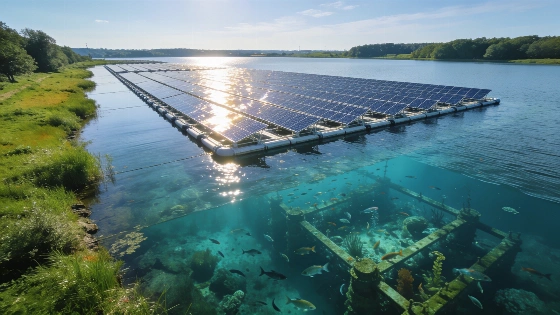
A floating solar park near Zwolle has become an unlikely haven for aquatic species. Researchers have recorded a sharp rise in fish and invertebrates beneath the installation, highlighting how renewable energy projects can reshape local ecosystems in surprising ways.
When the Bomhofsplas floating solar farm was launched on a former sand extraction lake near Zwolle in 2020, its primary goal was clear: generate clean electricity for thousands of Dutch households. But as the panels began to hum with energy, something unexpected unfolded beneath the surface. Ecological monitoring has now revealed that the installation has become a thriving refuge for aquatic life, with hundreds of fish and nearly 2,000 invertebrates recorded living under the solar array.
The Bomhofsplas project covers 18.25 hectares of water with 72,000 solar panels, delivering up to 27.4 MWp—enough to power more than 7,200 homes, according to a study published in Sustainability. Yet the most striking results have emerged not from the energy output, but from the ecosystem forming below. Ecocean, a specialist in aquatic biodiversity, installed 20 Biohut structures in three zones of the park and conducted ecological surveys between 2020 and 2023. Their findings: 2,382 individual organisms, including 1,951 invertebrates and 431 fish, now inhabit the area beneath the panels.
Life Beneath the Panels
Among the species identified were common perch, cyprinids, tubenose gobies, gammarids, freshwater snails, zebra mussels, and even freshwater sponges clinging to the artificial habitats. These organisms play a crucial role in the aquatic food web, forming the base that supports larger species. Young fish were observed using the Biohut structures as shelter and nursery grounds, suggesting the installation is not just attracting life, but helping it flourish.
The Biohut modules themselves are designed to mimic natural refuges, offering protection, food, and surfaces for microorganisms and invertebrates to colonize. Over time, these artificial habitats have matured, supporting a richer and more balanced ecosystem. Ecocean notes that the abundance of species at the base of the food chain points to a stable environment capable of sustaining diverse aquatic life beneath the solar farm.
Balancing Energy and Ecology
What makes Bomhofsplas notable is its dual function: producing renewable energy while restoring ecological value to an artificial, post-industrial landscape. Unlike installations that compete with farmland or natural habitats, floating solar farms on extraction lakes can avoid land-use conflicts and even help rehabilitate degraded water bodies. This approach echoes the growing interest in multi-use infrastructure, where energy production and environmental recovery go hand in hand.
However, researchers caution against assuming these positive effects will automatically occur at every floating solar site. The impact depends on factors such as water depth, the proportion of surface covered by panels, local species, water circulation, and the specific design of the installation. Previous studies at Bomhofsplas using underwater drones and sensors found little change in key water quality parameters, but experts stress the need for long-term monitoring to fully understand the ecological consequences.
Lessons and Caution for Future Projects
The Bomhofsplas case offers a clear message for the renewable sector: integrating ecological measures from the outset—such as habitat structures and biodiversity criteria—can allow floating solar farms to deliver both clean energy and new aquatic habitats, especially in industrial or degraded settings. As the sector expands, careful planning and ongoing ecological assessment will be essential to ensure that these projects deliver on their environmental promise without unintended harm.
This story of unexpected ecological renewal recalls other instances where human intervention has reshaped local environments, such as the recent identification of an 18th-century Spanish warship off the coast of Marbella, which has become a unique underwater habitat for marine life (read more about the shipwreck's discovery and its ecological impact).