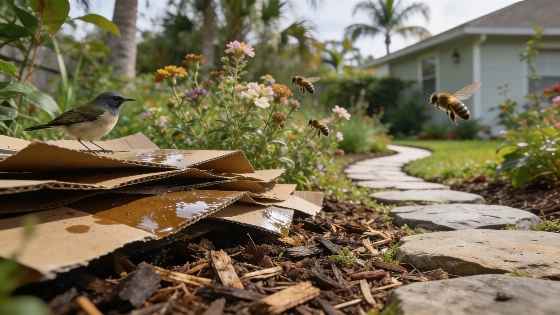
A Florida resident replaced his front lawn with layers of cardboard, mulch, and native plants, creating a low-maintenance garden that attracts bees, birds, and butterflies. The project, inspired by local ecosystems, also includes edible species and stone pathways.
In a quiet Florida neighborhood, a homeowner has replaced his traditional front lawn with a thriving garden designed to support local wildlife. Using a straightforward no-dig approach, he covered the grass with wet cardboard, added organic mulch, and planted a mix of native and edible species. The transformation, featured by Food Forest Florida, aims to mimic the natural oak ecosystems of the region while reducing water use and maintenance.
The process began with sheet mulching—a method that involves layering damp cardboard directly over existing grass. This barrier suppresses weeds and grass without the need for digging or heavy machinery. On top of the cardboard, the homeowner spread thick organic mulch and installed edging to prevent runoff during Florida’s frequent rains. According to guidance from the University of Florida, this technique not only limits weed growth but also enriches the soil as the cardboard and mulch decompose.
Once the groundwork was set, the garden took shape with winding stone paths and distinct planting zones. The selection of native and naturalized plants was intentional: species were chosen to attract bees, butterflies, and birds, while also providing food for both wildlife and residents. Edible plants were integrated alongside flowering natives, creating a landscape that offers nectar, pollen, seeds, and shelter throughout the year.
Experts from the U.S. Forest Service recommend grouping plants with staggered blooming periods and varying heights to maximize resources for pollinators. The garden’s design follows these principles, ensuring that pollinators can easily find what they need. Additional features, such as nesting areas and natural shelters, further support local biodiversity. In some European cities, similar efforts have included installing bee bricks in new buildings, but these are most effective when paired with nearby flowering plants and suitable habitats.
Mulch plays a crucial role in the garden’s success. By shielding the soil from direct sunlight, it helps retain moisture, suppresses weeds, and protects against erosion. As organic materials like shredded leaves and bark break down, they gradually improve soil fertility. The U.S. Environmental Protection Agency notes that American households often use up to 30% of their water outdoors, with that figure rising to 70% in hotter regions. While the Florida project did not track water usage before and after, the choice of drought-tolerant plants and mulch is expected to reduce irrigation needs.
For those considering a similar change, the transition does not have to be all at once. The sheet mulching method can be applied to small sections—around a tree, along a sidewalk, or in a corner of the yard—before expanding as time and resources allow. This gradual approach lets homeowners observe how different areas respond to sun, shade, and rainfall, and adjust plant choices accordingly.
It’s important to note that plant selections should always be tailored to local conditions. Species that thrive in Florida may not be suitable for gardens in Spain or other regions, and introducing non-native plants can sometimes cause ecological problems. As highlighted by the University of Florida, the U.S. Department of Agriculture, and the EPA, careful planning and the use of regionally appropriate species are key to creating sustainable, wildlife-friendly gardens.
Similar restoration efforts have shown positive results elsewhere. For example, after the removal of invasive fish in the Pyrenees, two mountain lakes saw a rapid return of native amphibians and improved water clarity, as reported in a recent ecological update. These cases underline how targeted interventions—whether in a backyard or a protected landscape—can quickly benefit local ecosystems.